By Damián Antommarchi – NYC Weed News – Fajardo, Puerto Rico, – SCORE 6/10
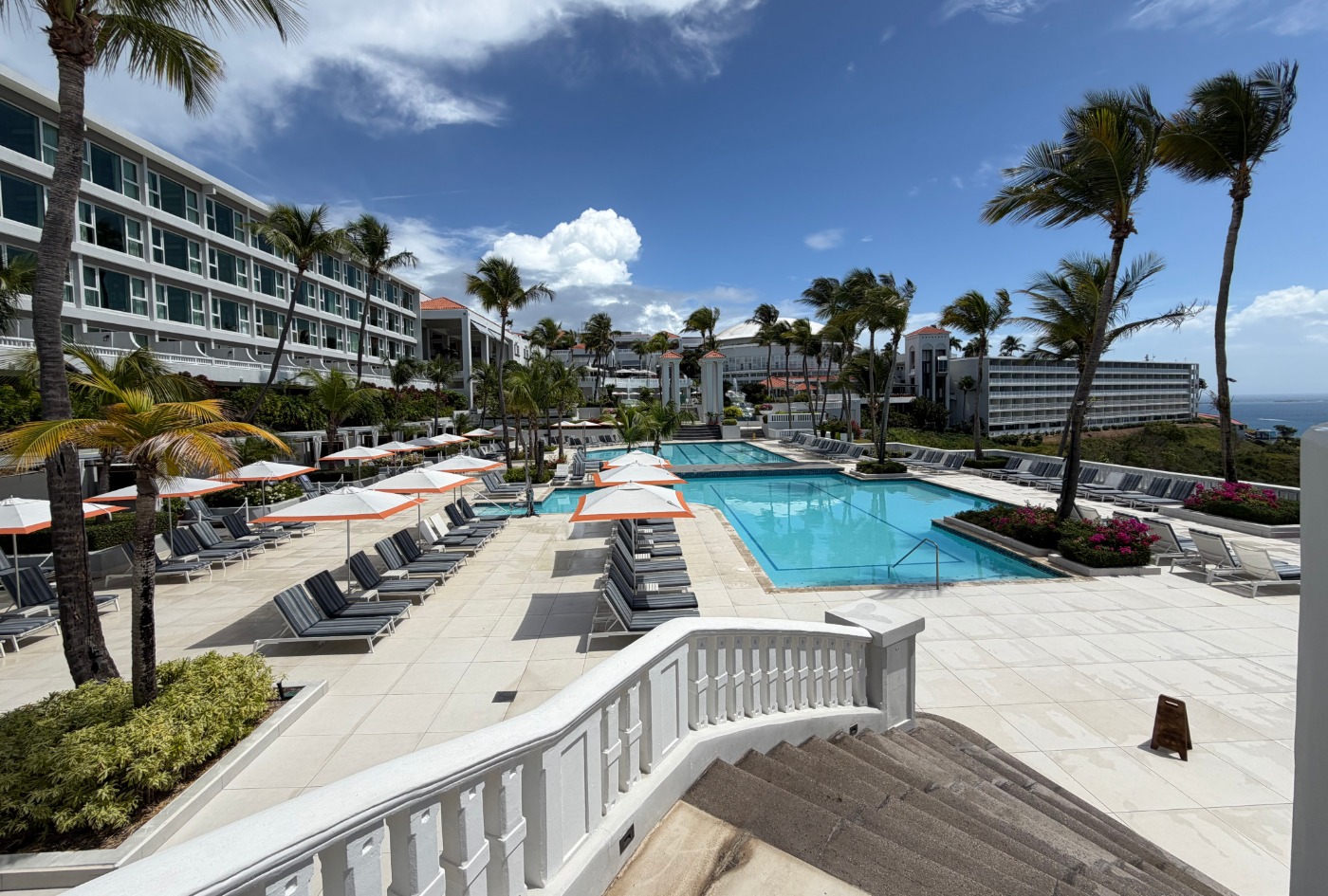
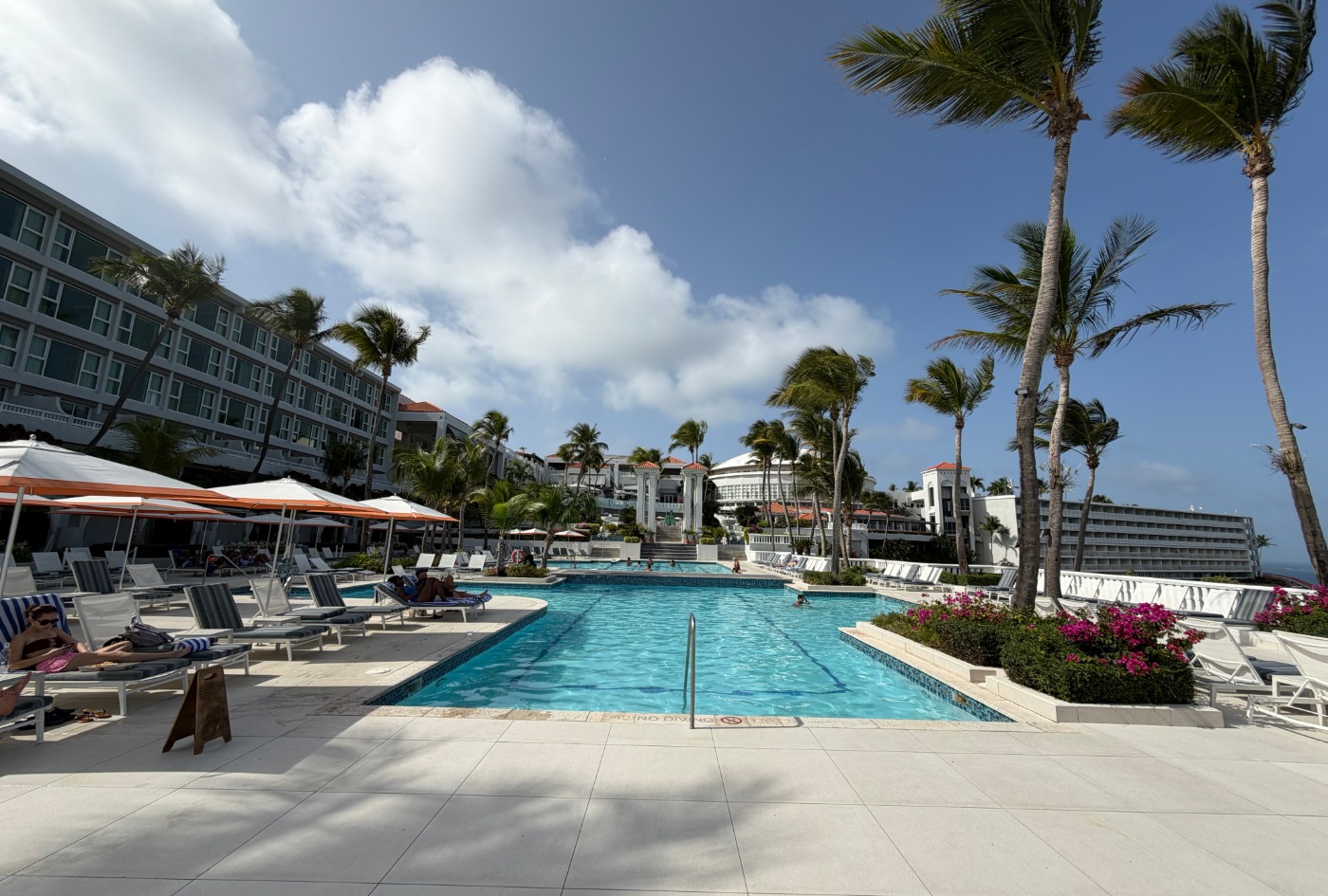
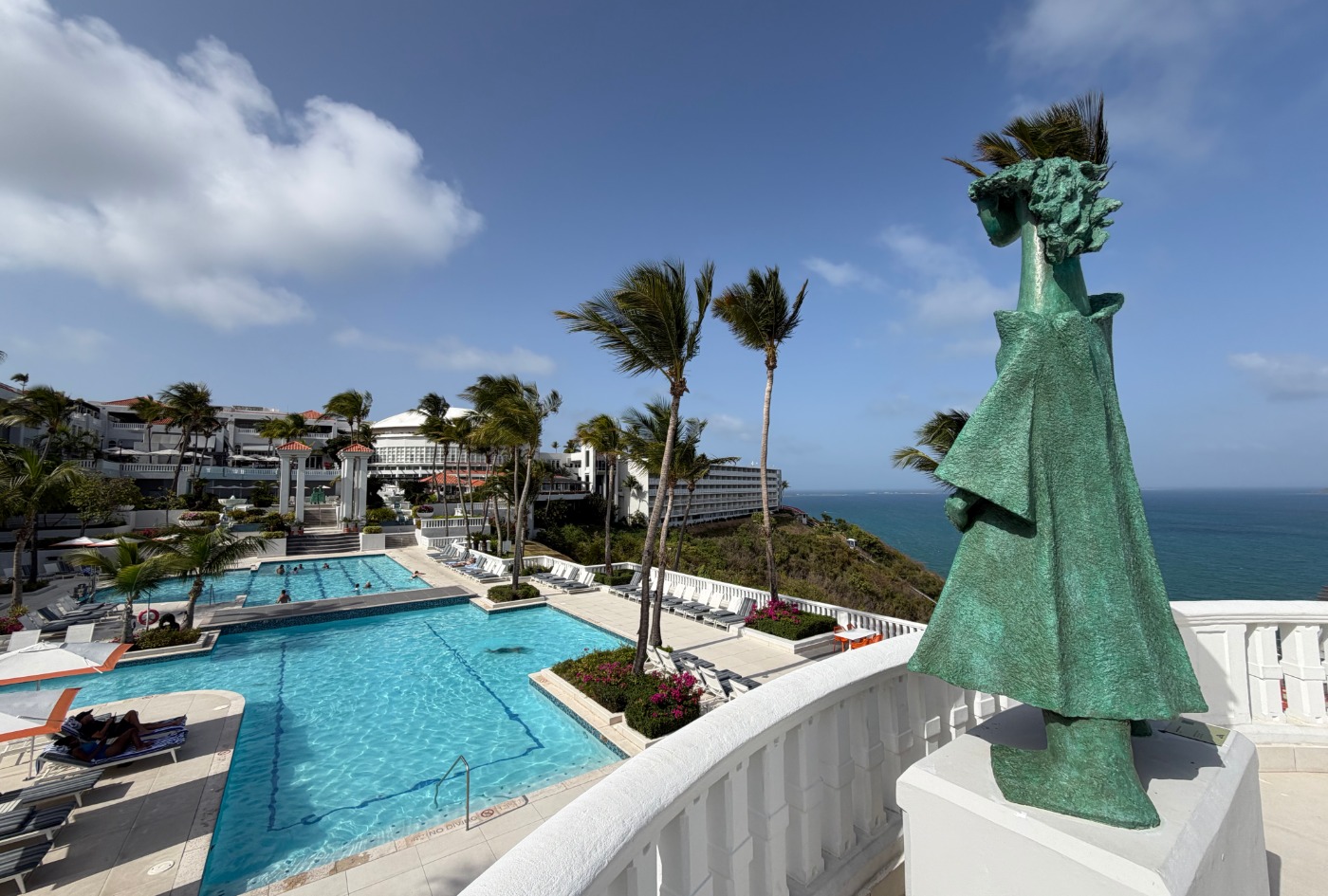
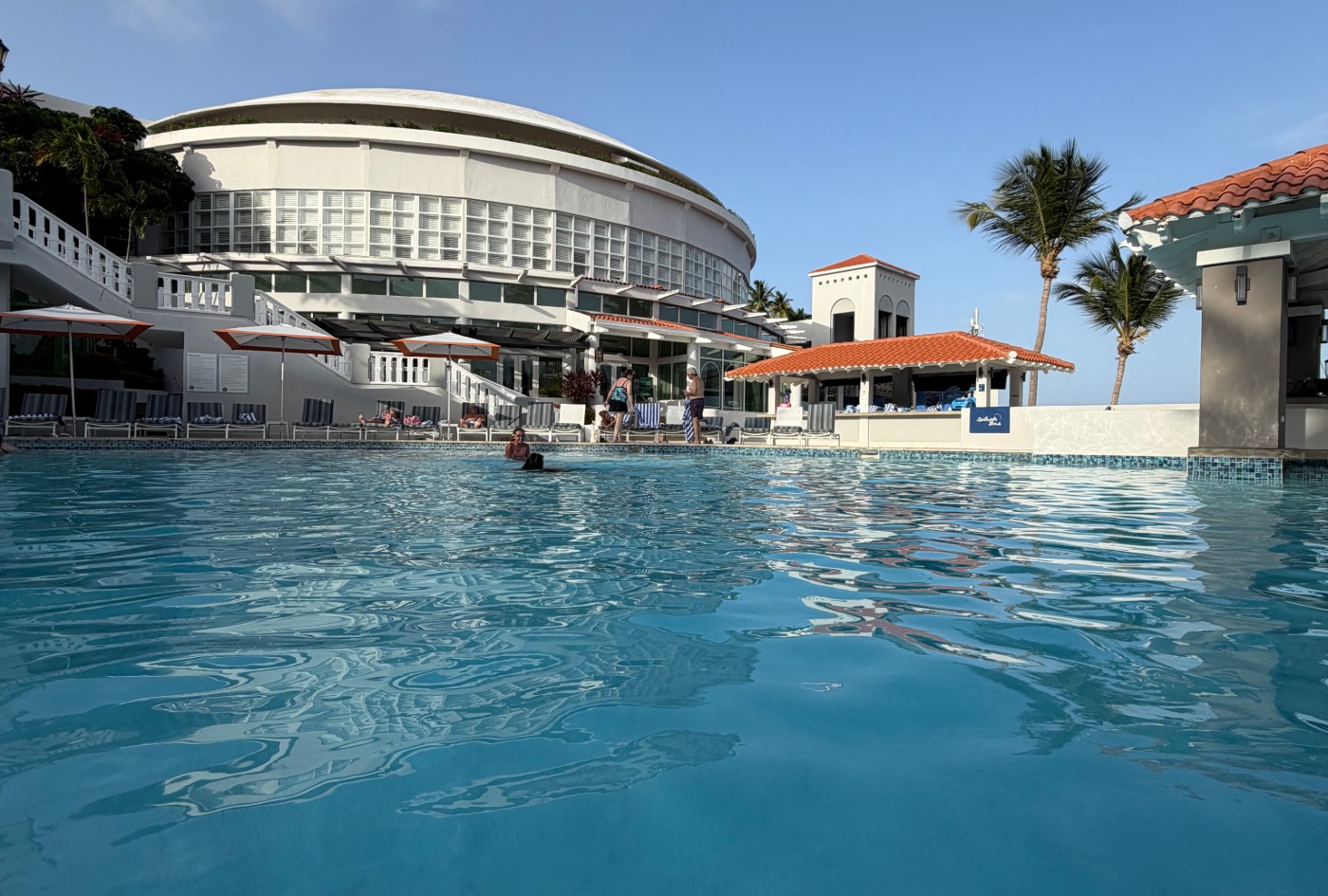
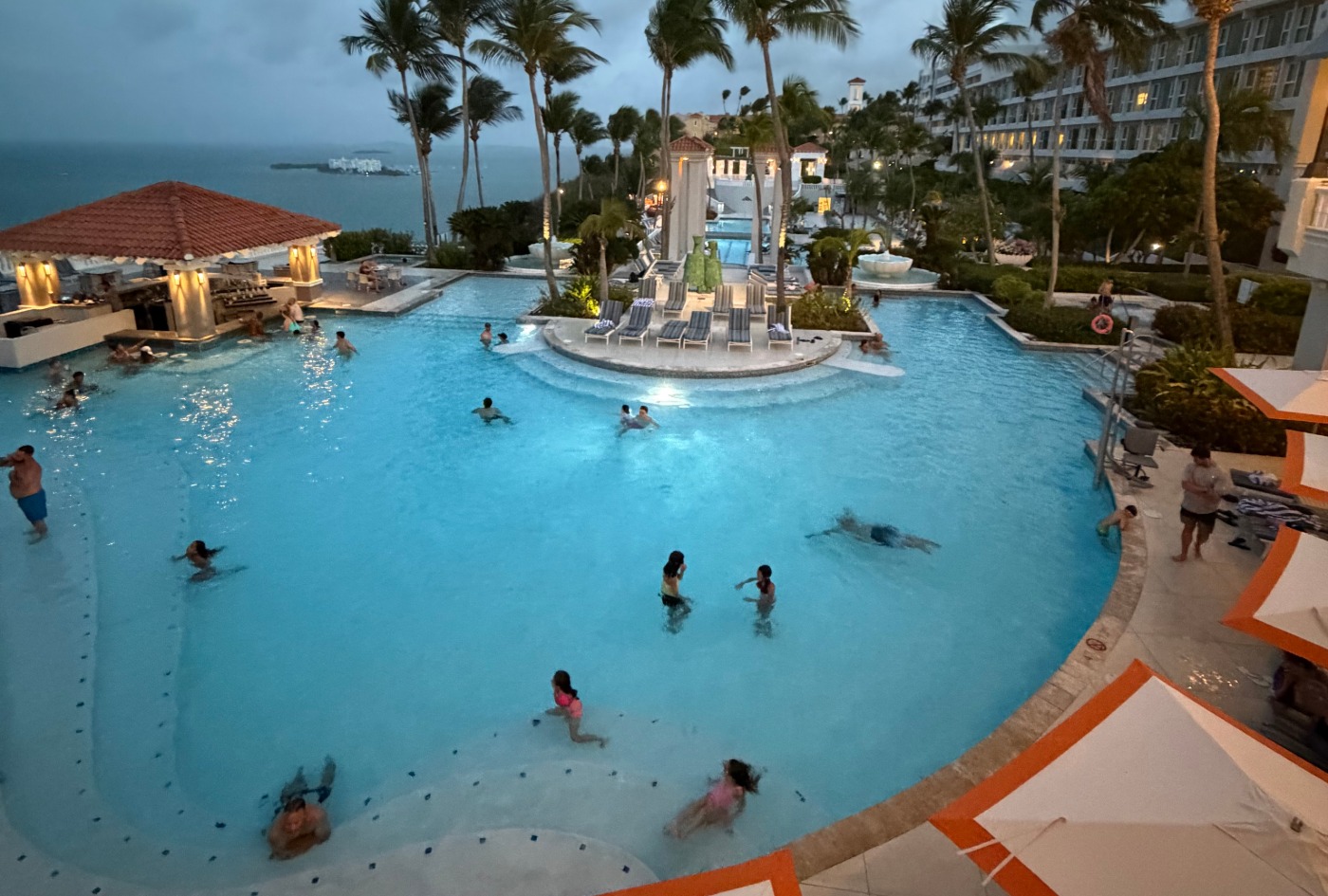
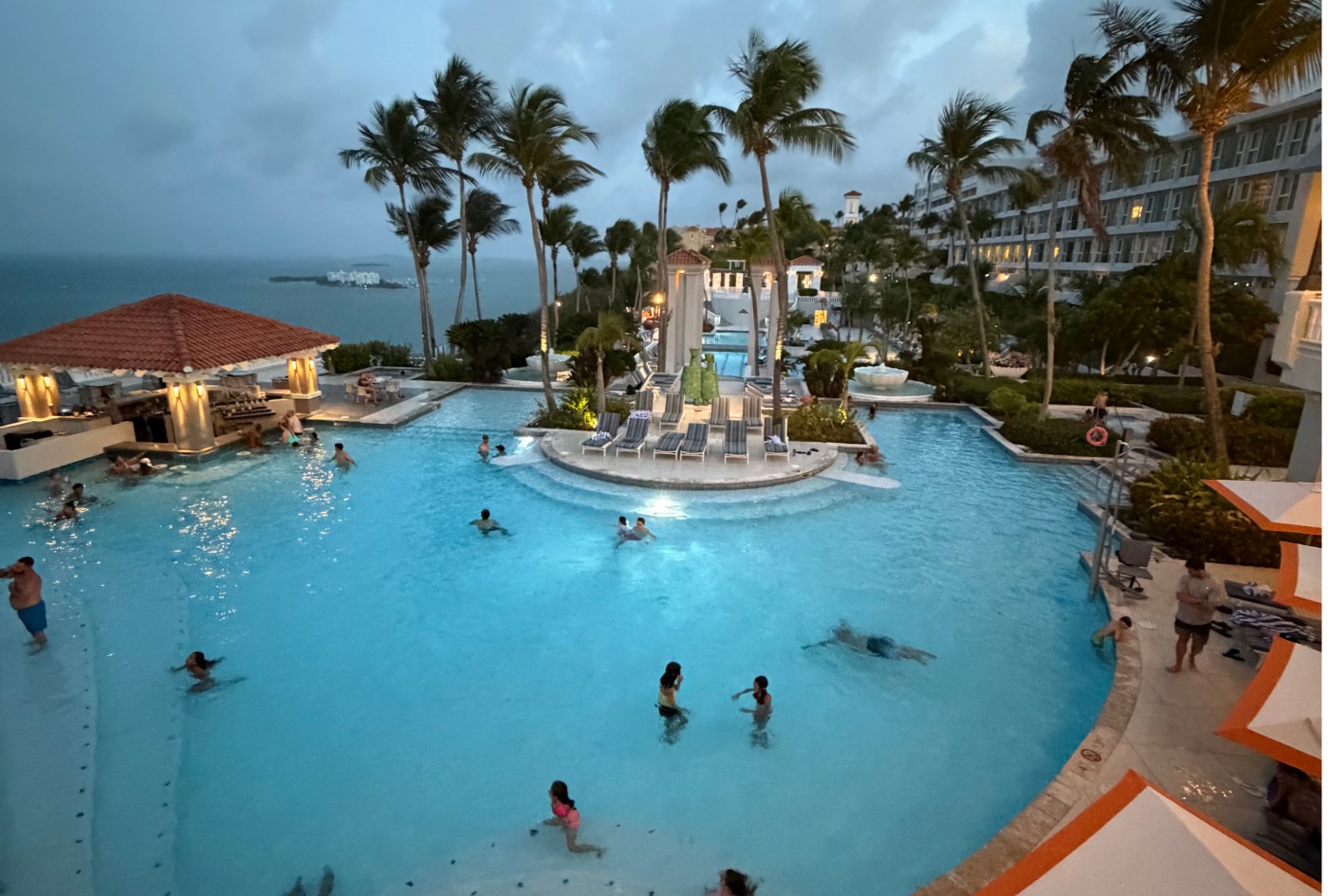
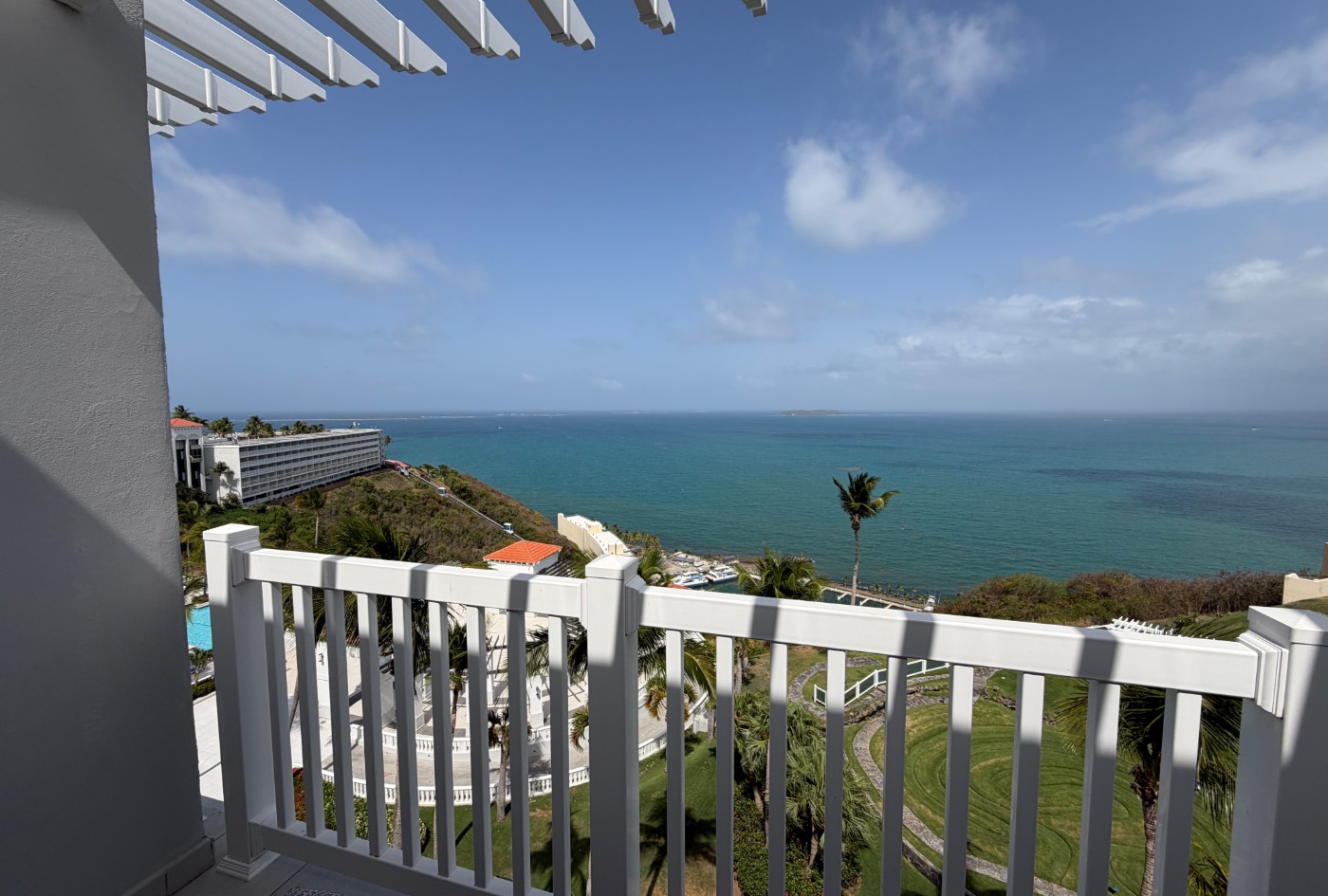
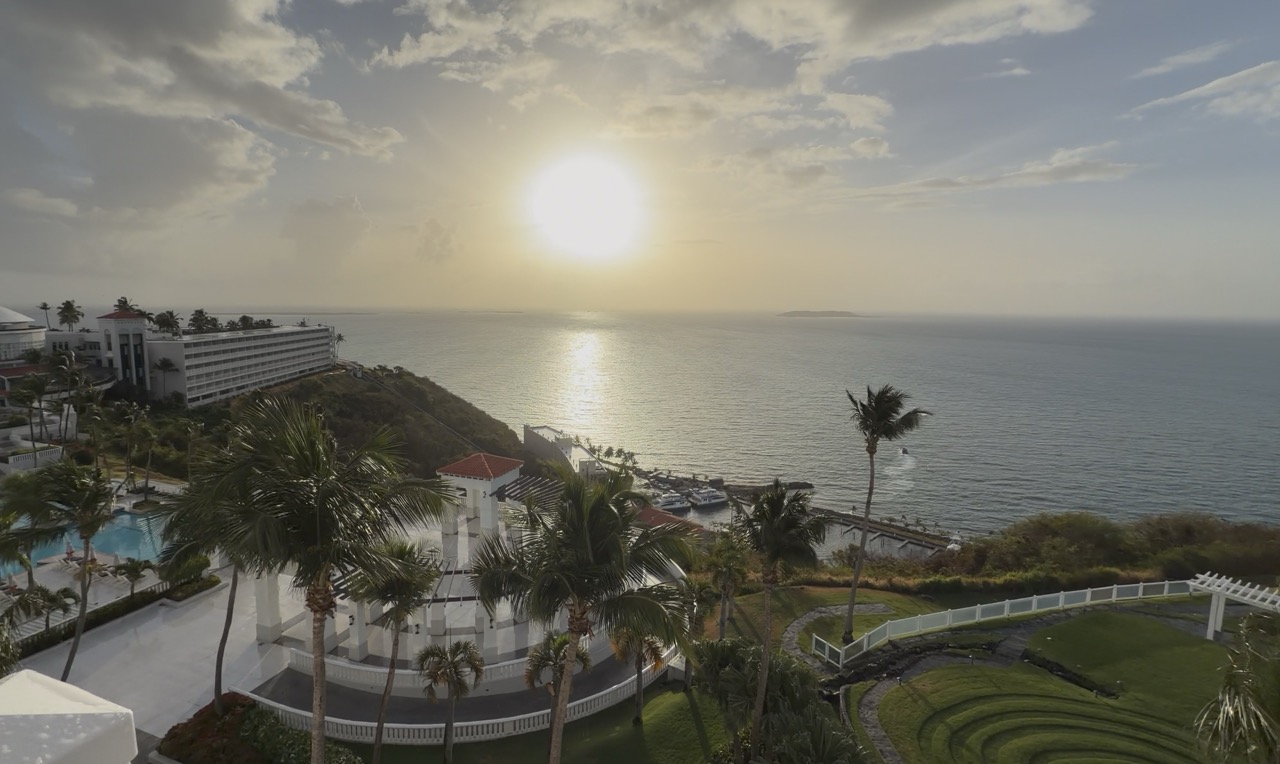
You don’t really understand El Conquistador until you’re standing on a balcony you weren’t originally supposed to have, watching the funicular crawl down a cliff toward a marina that looks like a toy from up there, and realizing the golf course, the water park, and the private island you can see in the distance are all still the same hotel. El Conquistador markets itself as Puerto Rico’s largest event resort — roughly 500 acres, currently about 677 rooms and climbing toward 750 — and once you’ve walked the property, that claim tracks. This place isn’t big the way resorts usually mean “big.” It’s big the way a small town is big. And like a small town, it has neighborhoods that are thriving and neighborhoods that are clearly still catching up.
I went in expecting a nice hotel with a nice view. I left with a reporter’s notebook full of half-answered questions — about who actually owns this property, who owns the island next to it, what happened here during Hurricane Maria, and why an elevator in a five-star resort can sound like it’s actively negotiating with physics. Some of those questions I ran down. A few I couldn’t fully close the loop on, and I’ll say so plainly when that’s the case.
$220M+
total project cost cited near $263M
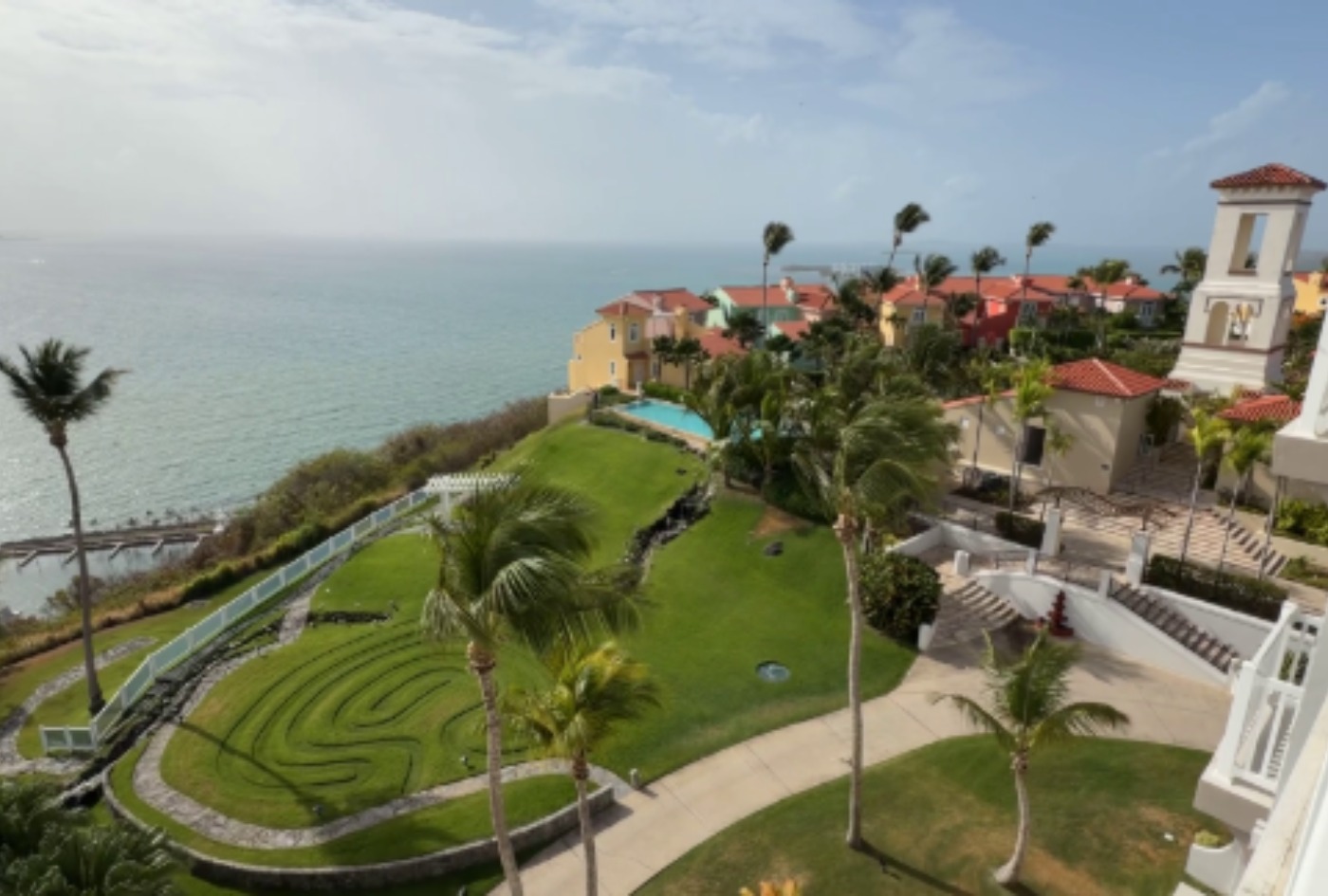
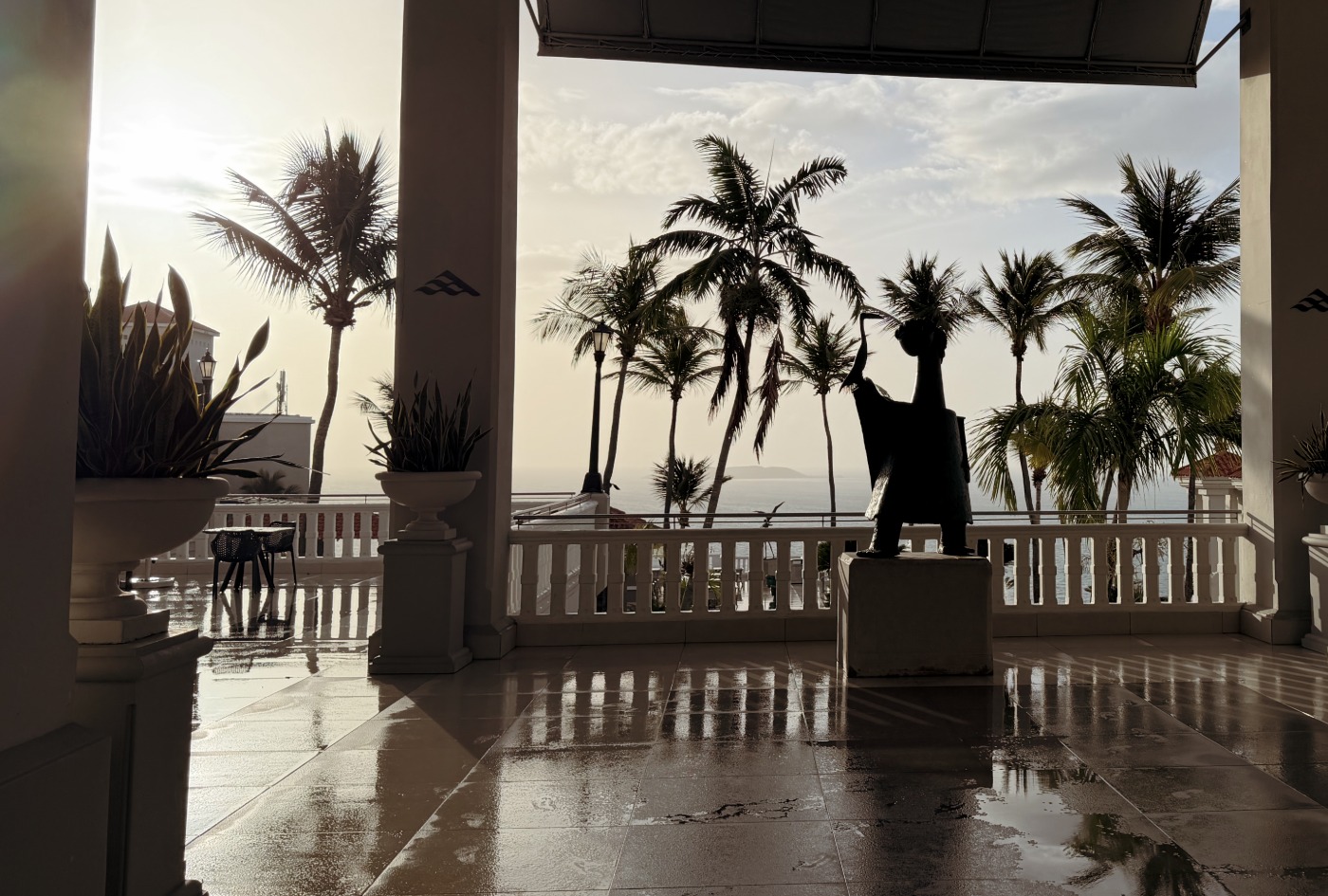
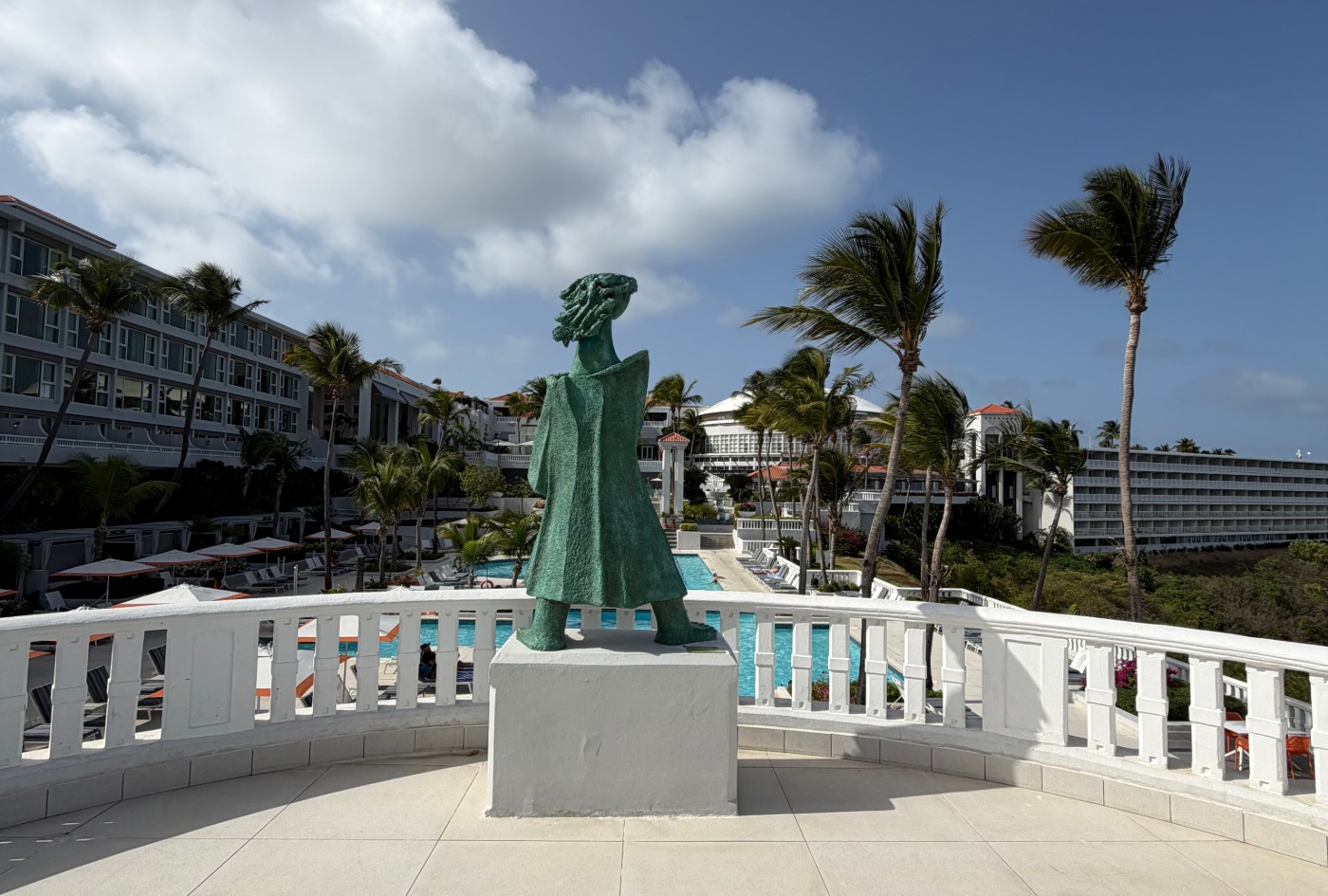
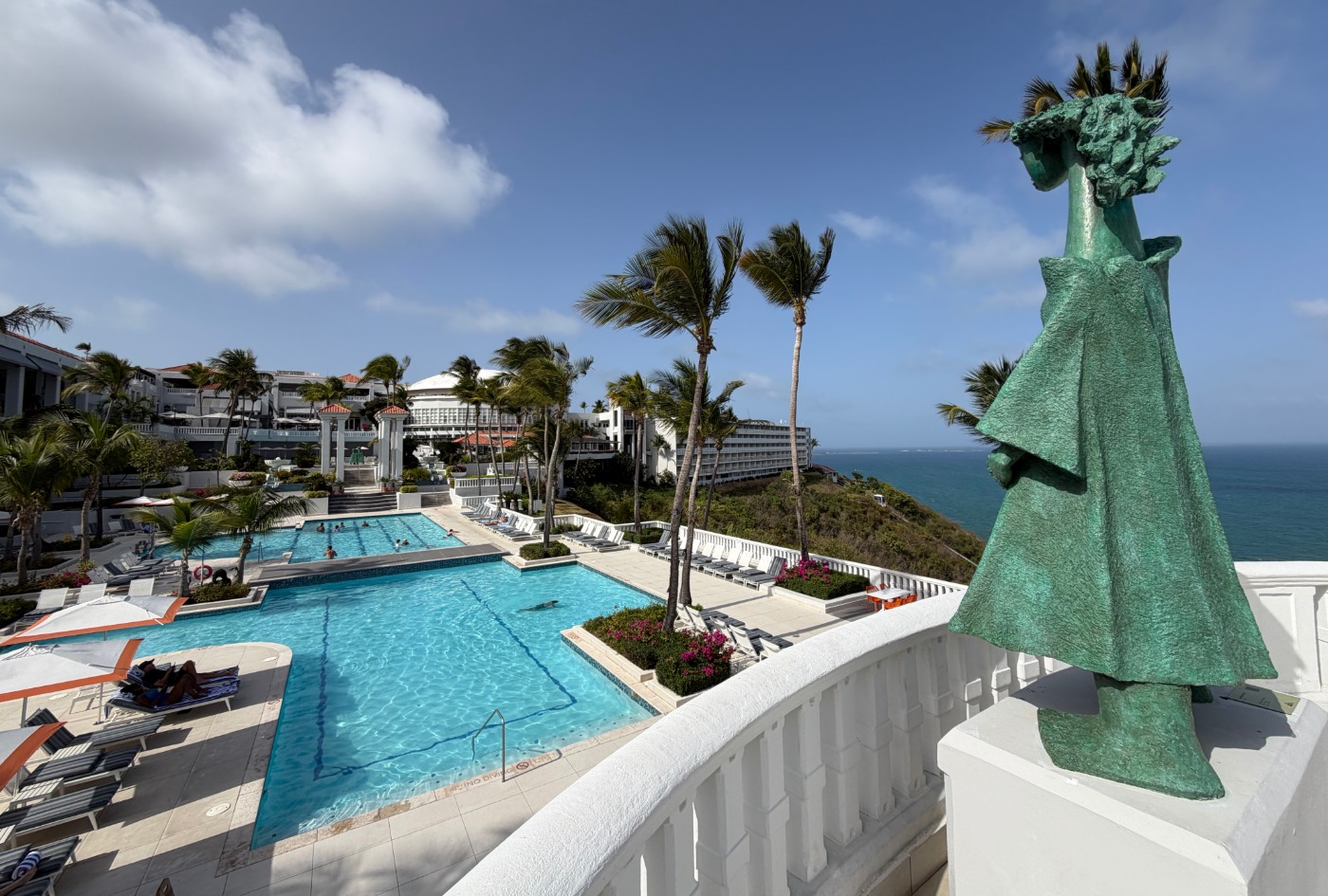
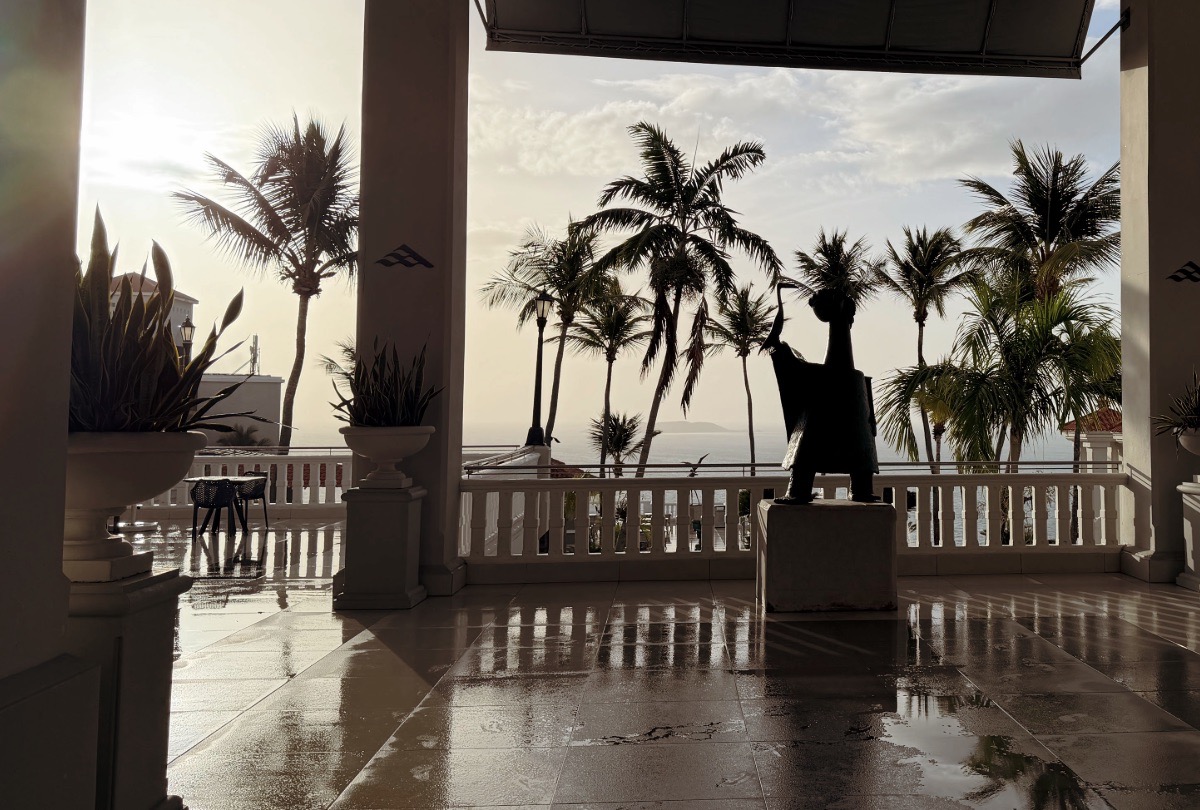
Morning light spills across El Conquistador’s open-air terraces, framing the Caribbean, palm trees and one of the resort’s distinctive sculptures. Photo: Damián Antommarchi / NYC Weed News
01 The Upgrade That Explains This Whole Property
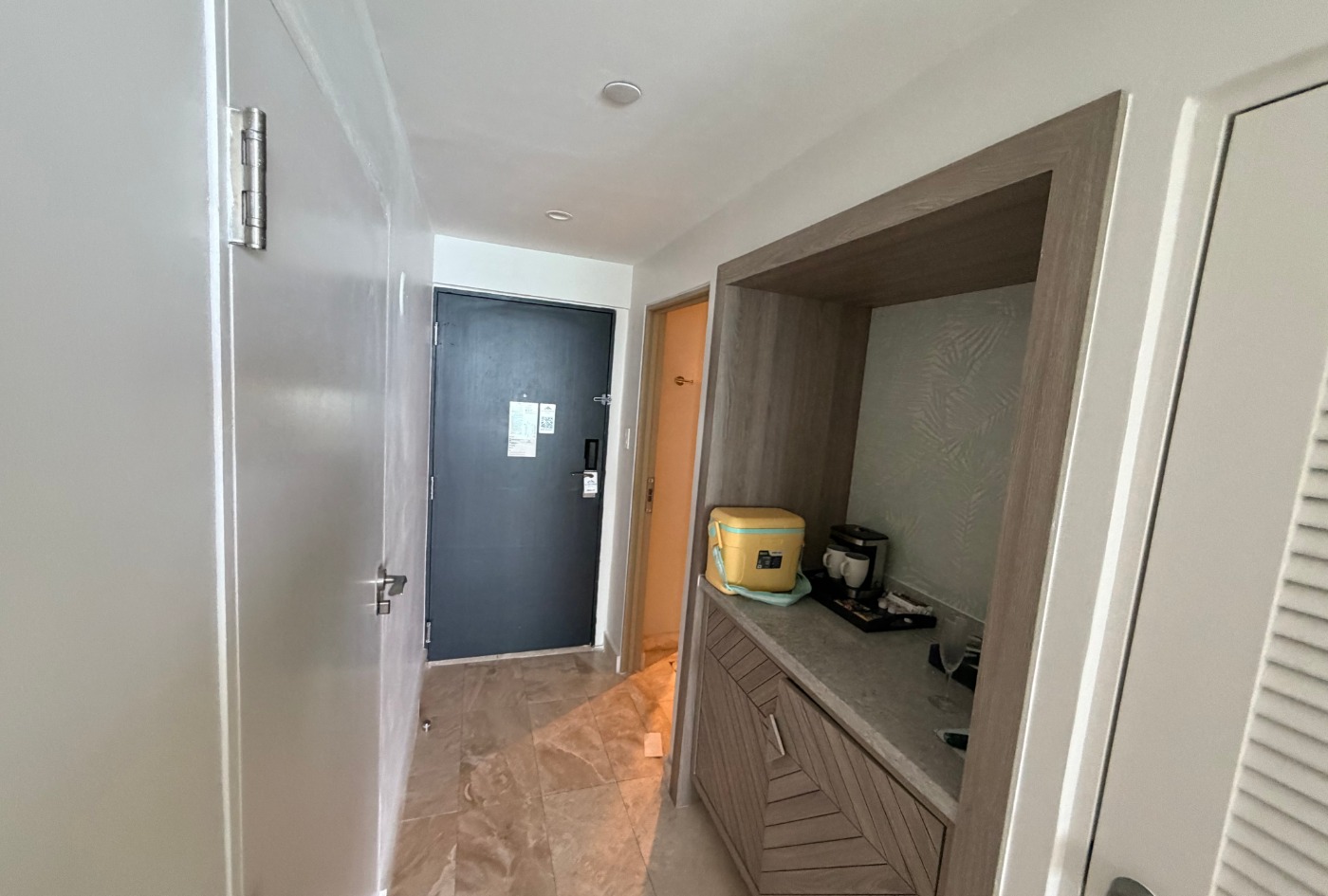
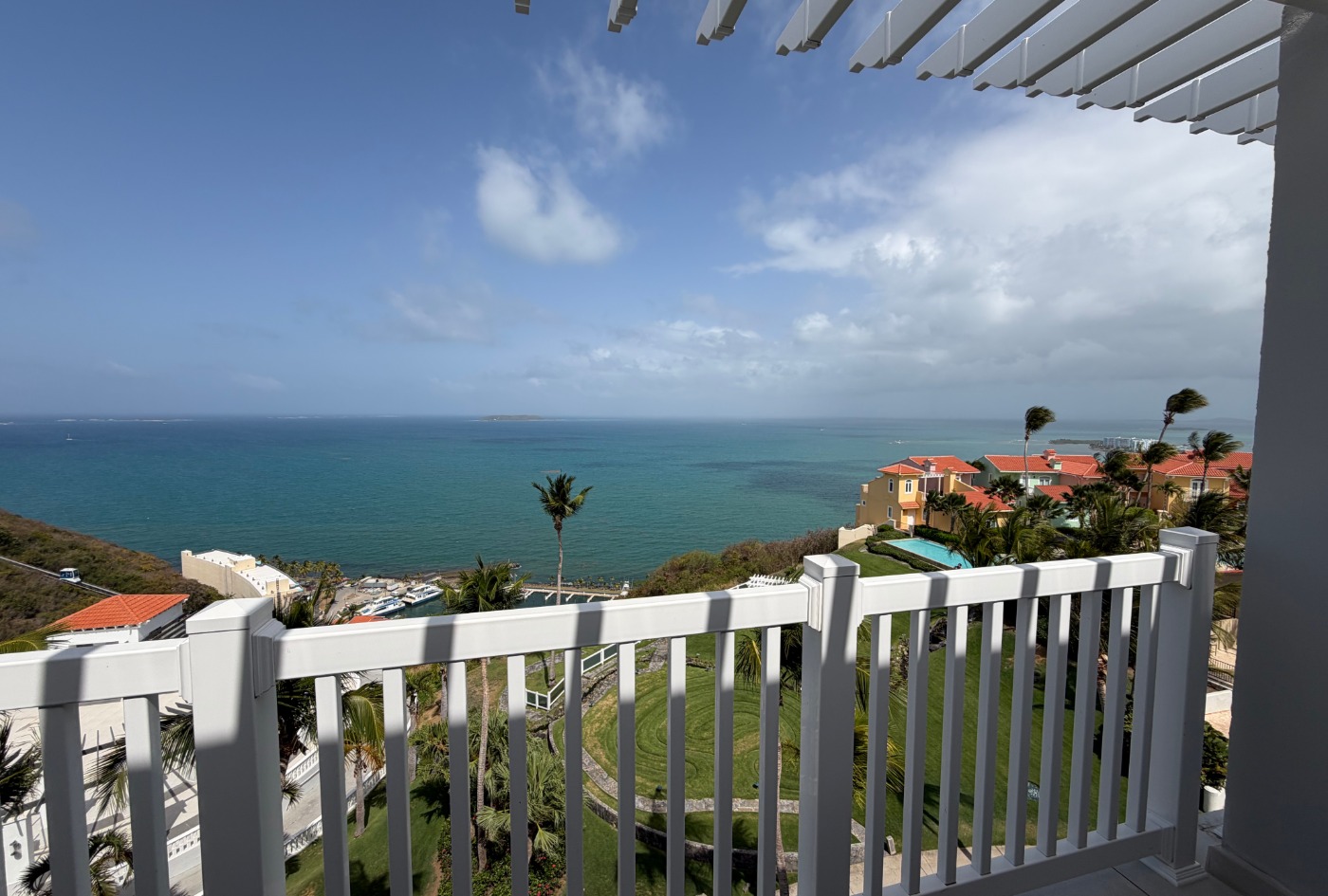
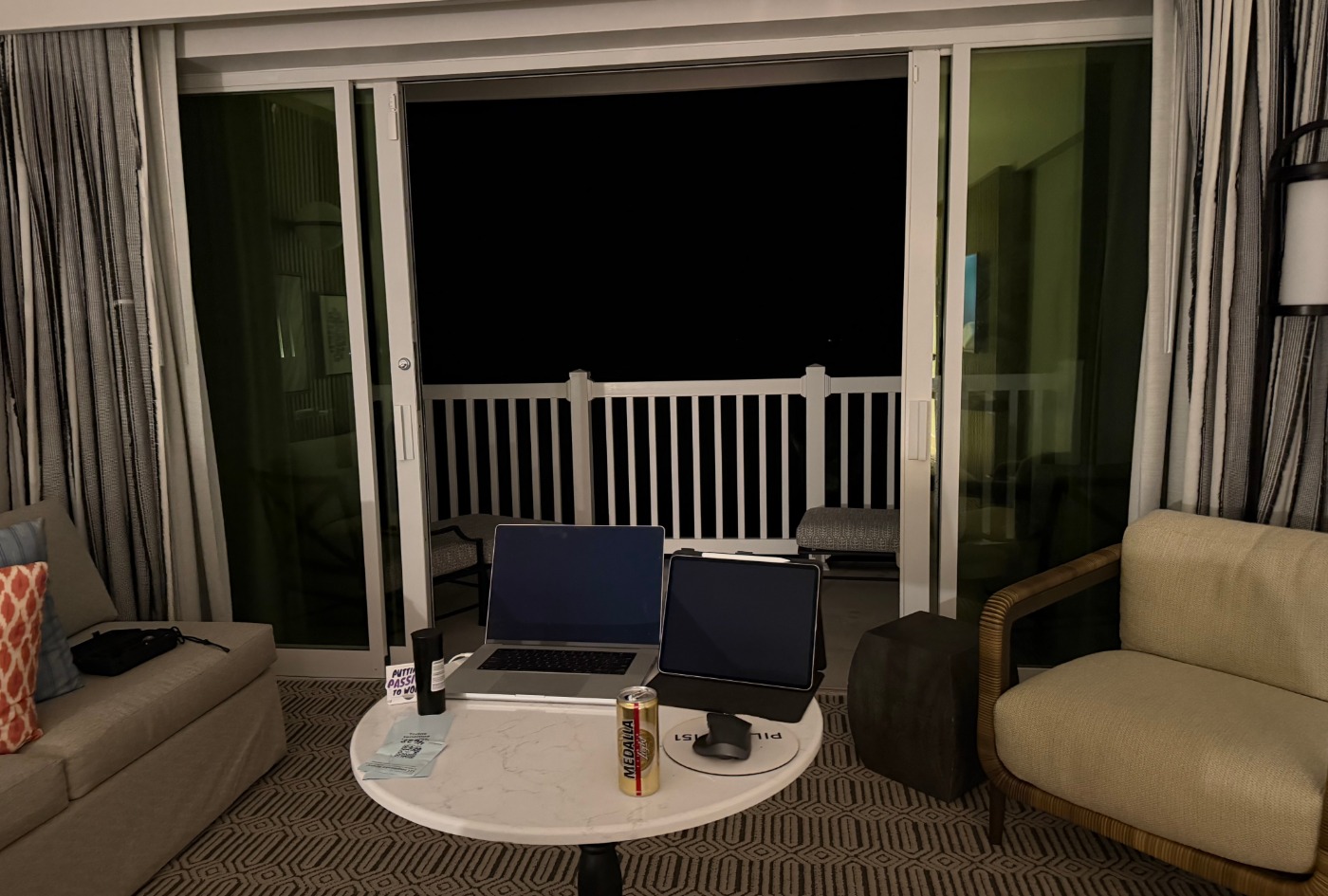
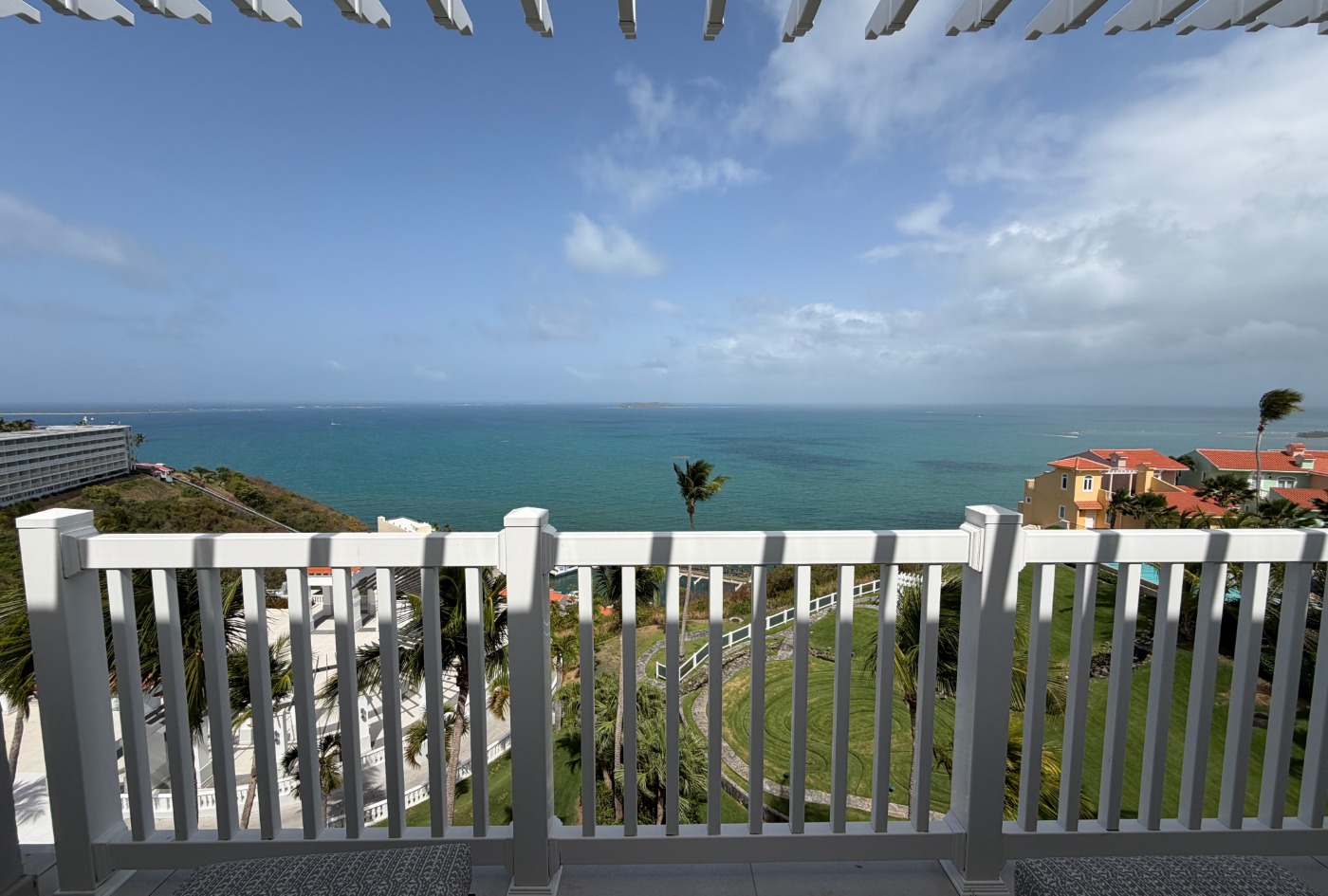
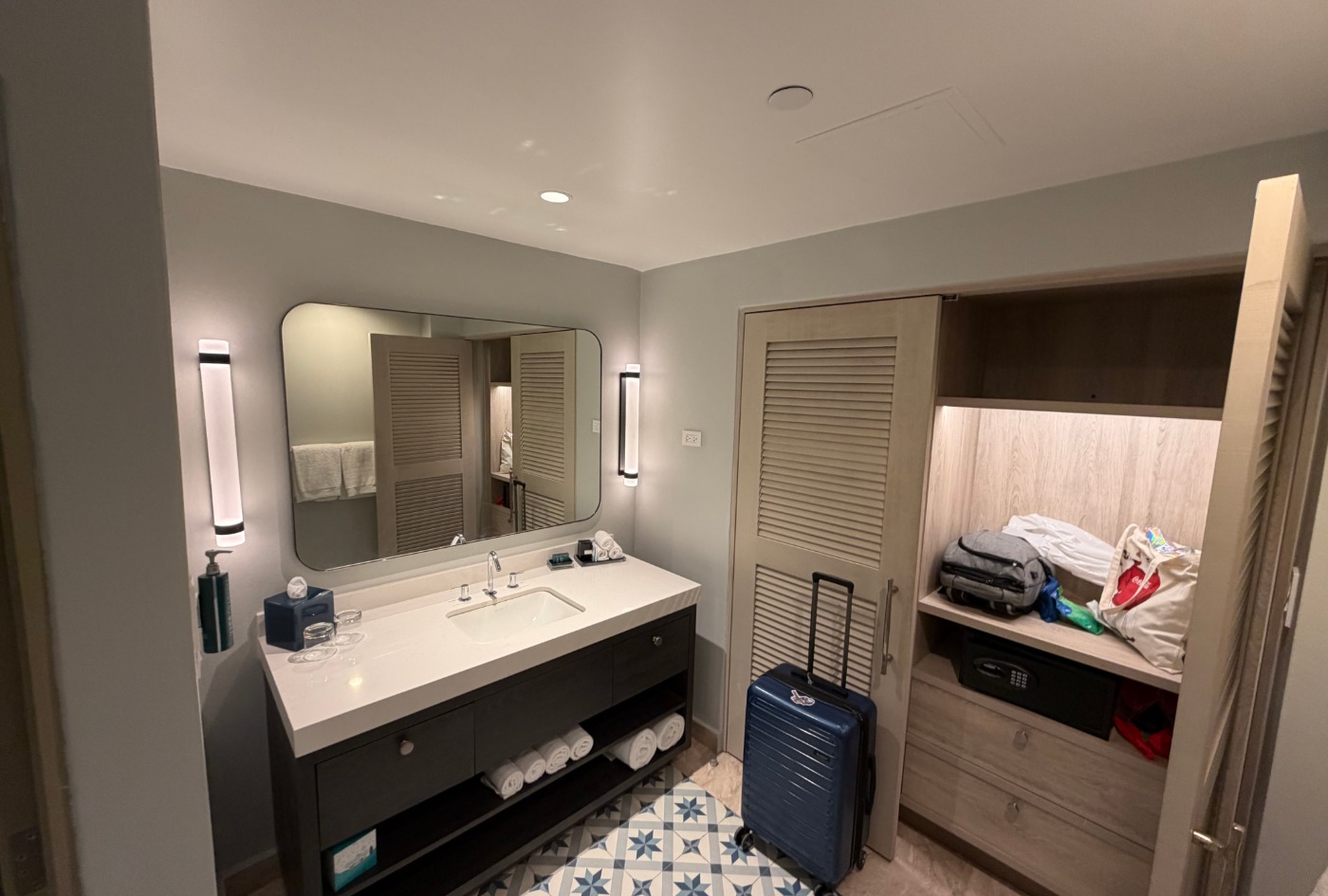
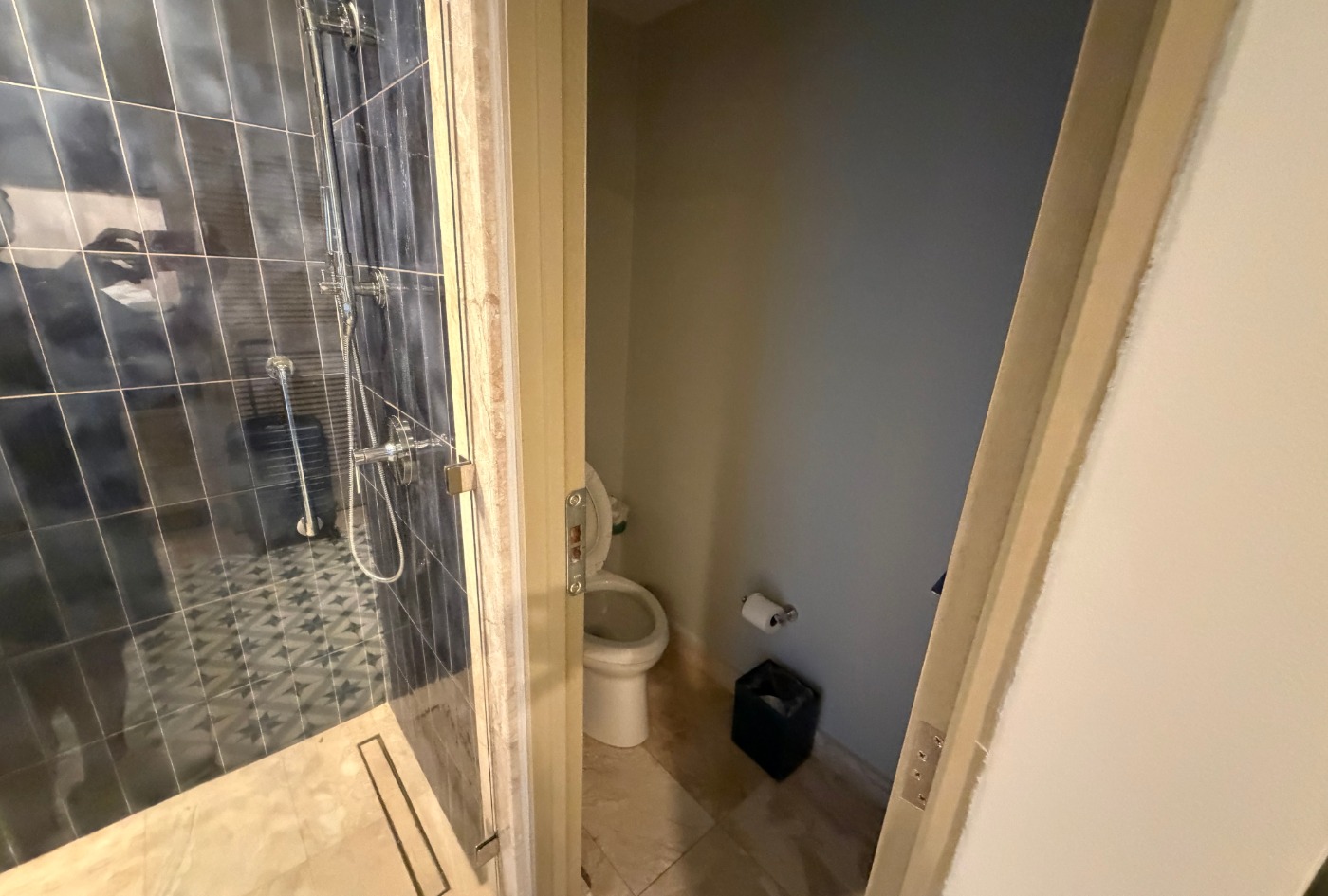
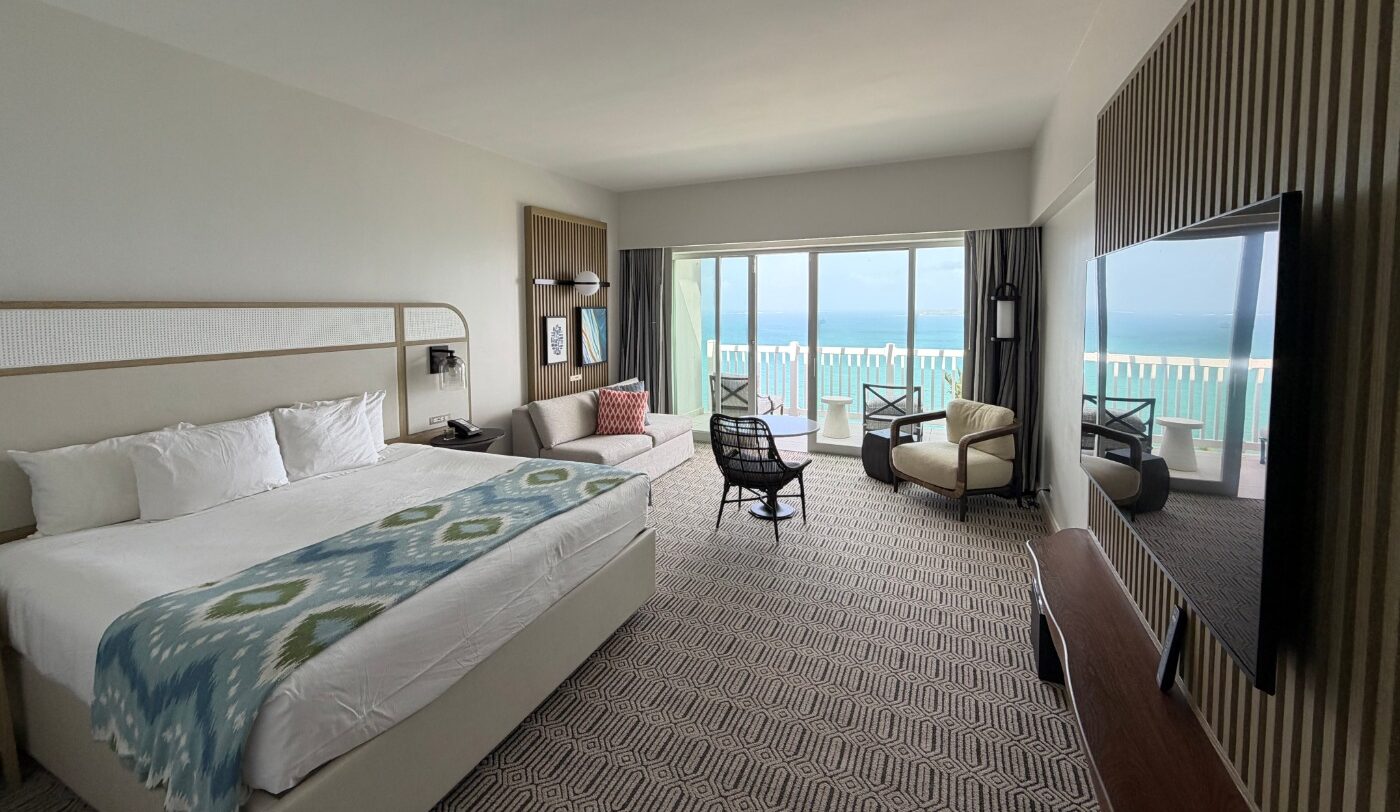
I’d booked a Las Brisas Ocean View, one king — a perfectly good room. What I got at check-in was Las Vistas Ocean View, top floor of the new right wing, with a balcony. I didn’t clock the significance until later: Las Vistas isn’t just a room tier. It’s the resort’s original name. When this place opened July 14, 1962, as an 84-room, four-story hotel, it was Las Vistas — before “El Conquistador” existed as a brand. Getting bumped into a Las Vistas room, top floor of the newest wing, put me standing where the whole 64-year story started.
The balcony was unreasonable — the kind of view and breeze that makes you forget everything else wrong with the property. And there was plenty.
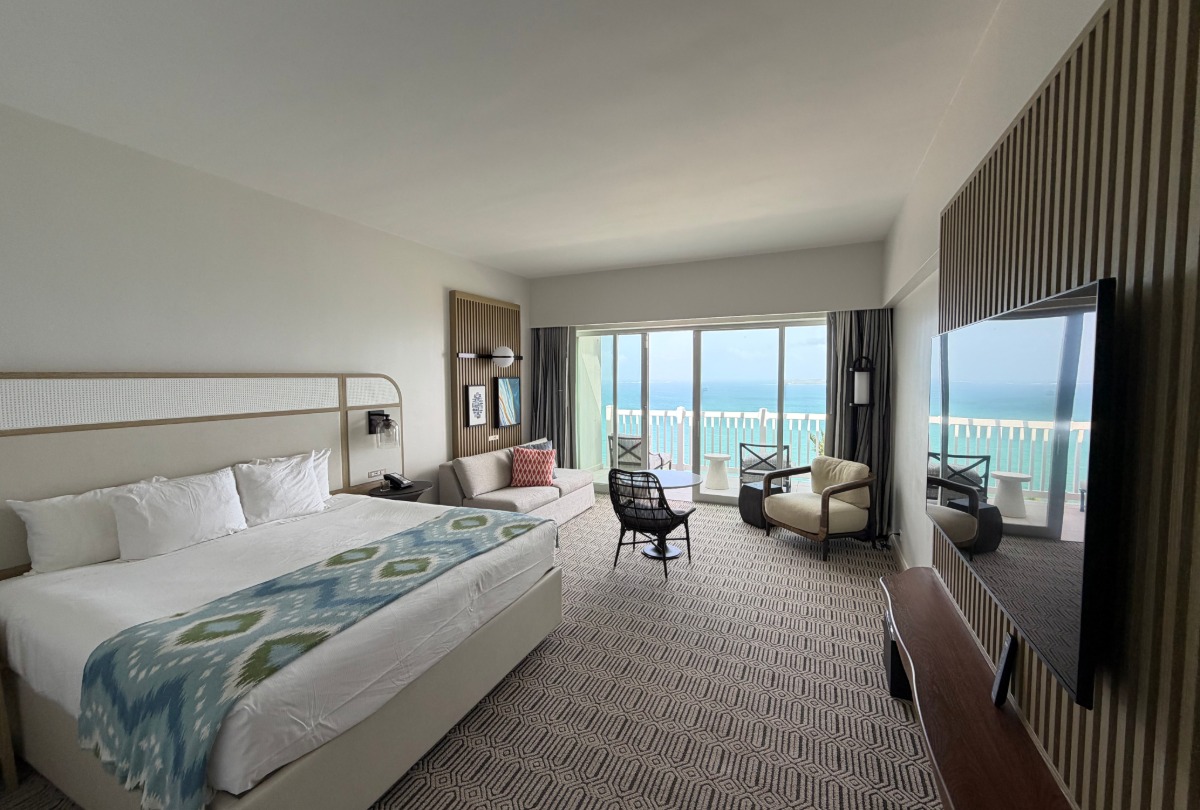
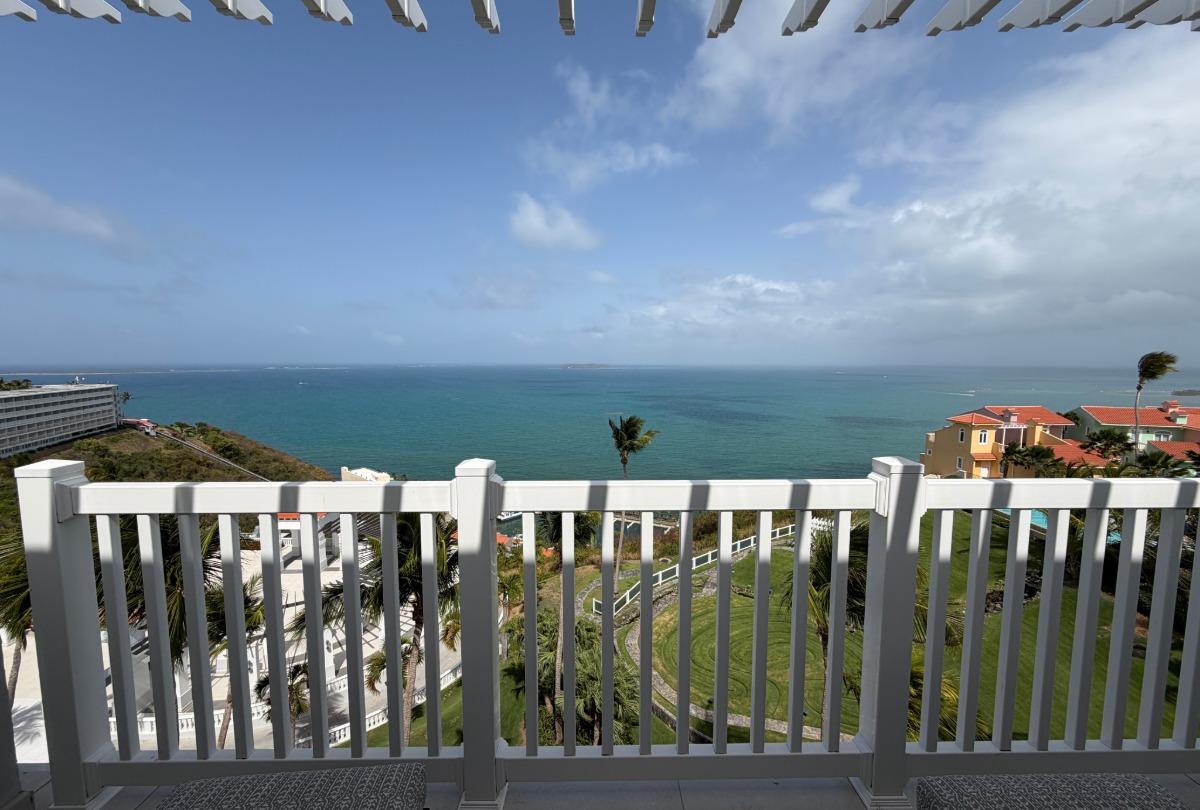
Reporting and photos from a multi-night stay, August 2026
02 A Property That Has Nearly Died Twice
Most guests treat El Conquistador like it’s always been here, gleaming, on its cliff. It hasn’t. This resort has been built, gutted, closed, and rebuilt twice over six decades — which is the only way to understand why parts of it feel flawless and other parts feel like they’re still catching their breath.
“After an arduous battle, the resort closed to the public after Hurricane Maria” — the hotel’s own, understated way of describing nearly four years of darkness on a cliff that used to run 24/7.
REPORTER’S NOTE
I couldn’t verify this in any news archive, court record, or company statement. What isdocumented: the weeks after Maria were chaotic. Staff got a stipend letter about three weeks out, then a January 2018 layoff notice hitting close to 1,000 employees, with the property closed and ownership in limbo for nearly two more years before Royale Blue Hospitality bought in. One guard alone on a wrecked, isolated island for weeks fits that timeline. Whether it was literally one person for a month, I can’t confirm — it’s the kind of legend that grows at a property this size, and I’m flagging it as staff lore, not fact, until someone puts a name and date on it.
This sent me down the deepest rabbit hole. Before Maria, Blackstone — yes, that Blackstone — owned the property under the Waldorf Astoria flag. After the storm, it did what institutional owners do with a wrecked asset: looked for the exit.
Here’s where it tangles, and I want to be precise rather than tidy about it. Public records list the November 2019 buyer as Urbano Varro, LLC, a commercial real estate company. Local press from that period credits the purchase and rebuild to Royale Blue Hospitality LLC, tied to Ángel Fullana Olivencia, CEO of Puerto Rican construction firm F&R Construction Group. The likely read — and the standard hotel-ownership structure — is that Urbano Varro holds the deed while Royale Blue operates the property. I could not independently confirm the exact legal relationship between the two. If you know more, I’d like to hear it.
Per Puerto Rico Tourism Company officials at the time, the buyer side paid Blackstone an undisclosed sum (reported in the tens of millions) and committed roughly $175 million to rebuild — which it largely did, with a $50 million CDBG-DR federal grant folded into a total project cost near $263 million.
Translation: a global private equity firm walked from a hurricane-wrecked asset, and Puerto Rico-based ownership rebuilt it into one of the island’s largest employers — a roughly 500-acre property it markets as Puerto Rico’s largest event resort. That’s a genuinely good comeback story.
It’s not spotless. In 2024, USVI ferry operator Cruz Bay Watersports sued Royale Blue Hospitality in federal court over roughly $108,000 in unpaid invoices, alleging Royale Blue had acknowledged the debt in writing back in 2022 and never paid. That’s an allegation, not a finding — I’m not treating one vendor dispute as a pattern. It’s public record and relevant, nothing more.
Almost nobody staying here knows this, and it changes how you should think about the “private island” pitch.
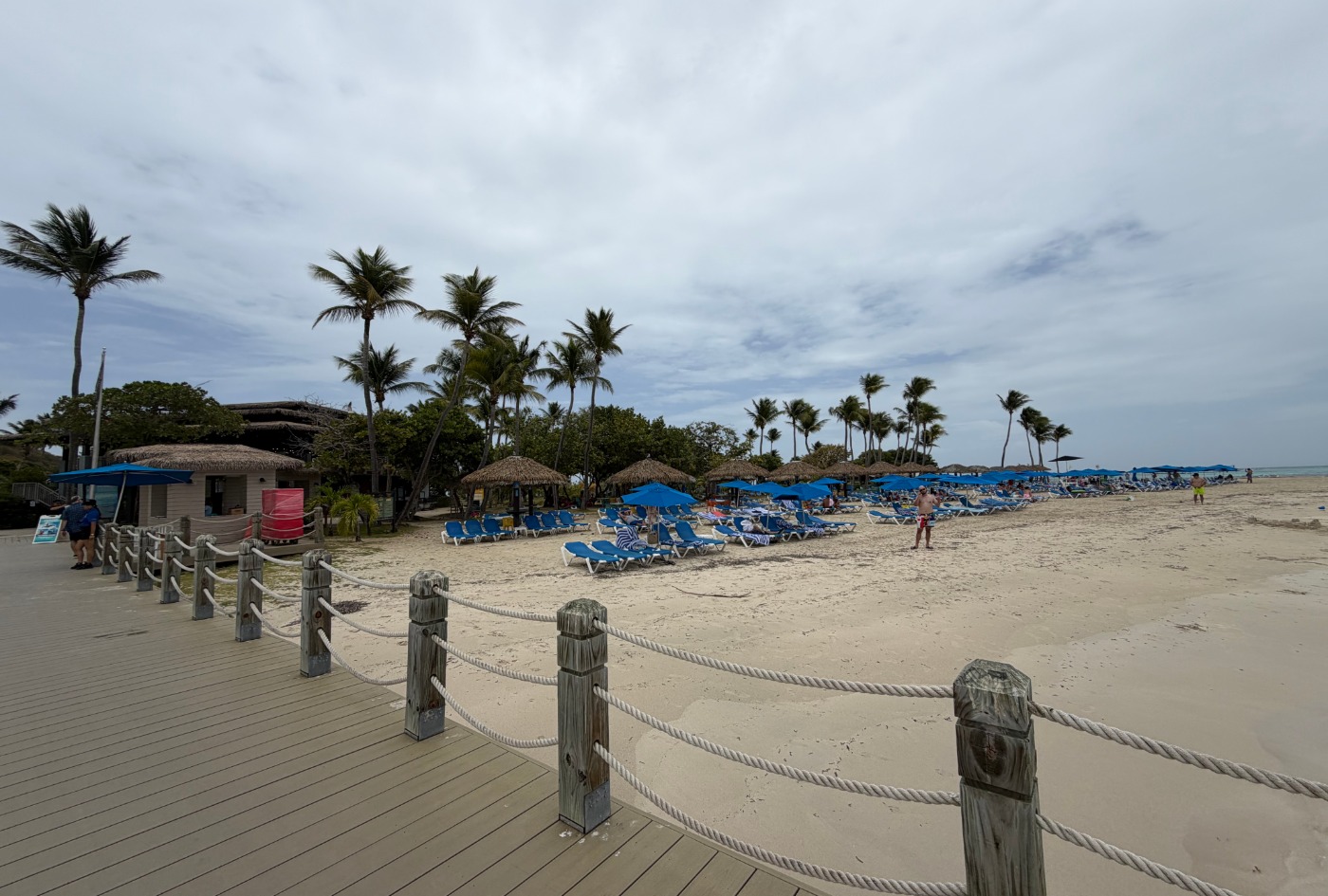
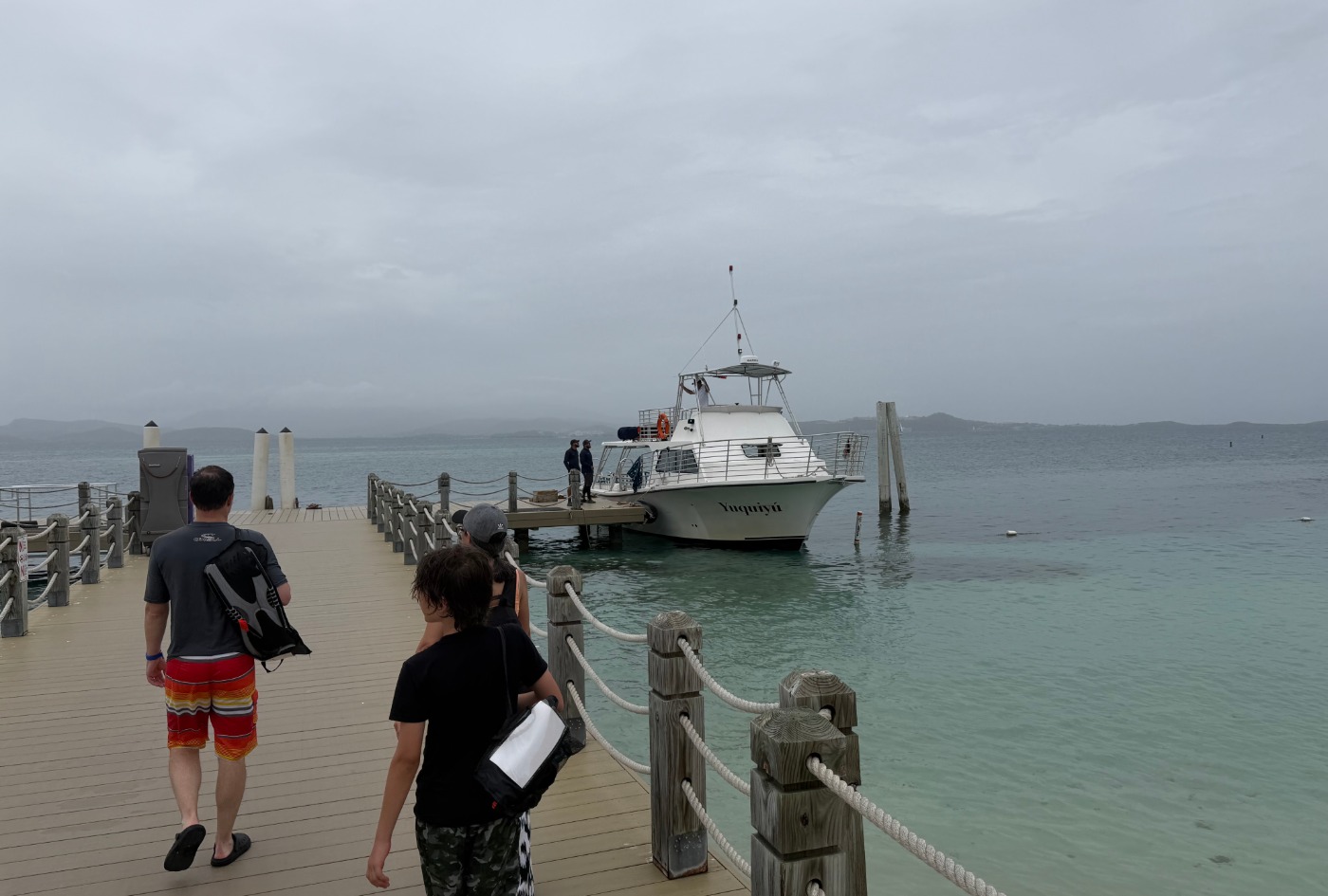
El Conquistador does not own Palomino Island. The 100-acre island a short ferry ride off the coast — white sand, cabanas, jet skis, coconut flan on the table — belongs to the Bachman family (descendants of Alberto Bachman Glauser, sometimes called the Fuertes Bachman family). Local lore says Bachman bought it in the 1930s for around $30,000, off his money as American Plumbing’s rep to Puerto Rico. His descendants still hold it.
El Conquistador leases the eastern portion — reportedly around $40,000 a month, a widely repeated figure I couldn’t verify against the current lease — and runs the ferry, the restaurant, and the water sports concession. “Our private island” isn’t exactly false. It’s a rental, not a deed.
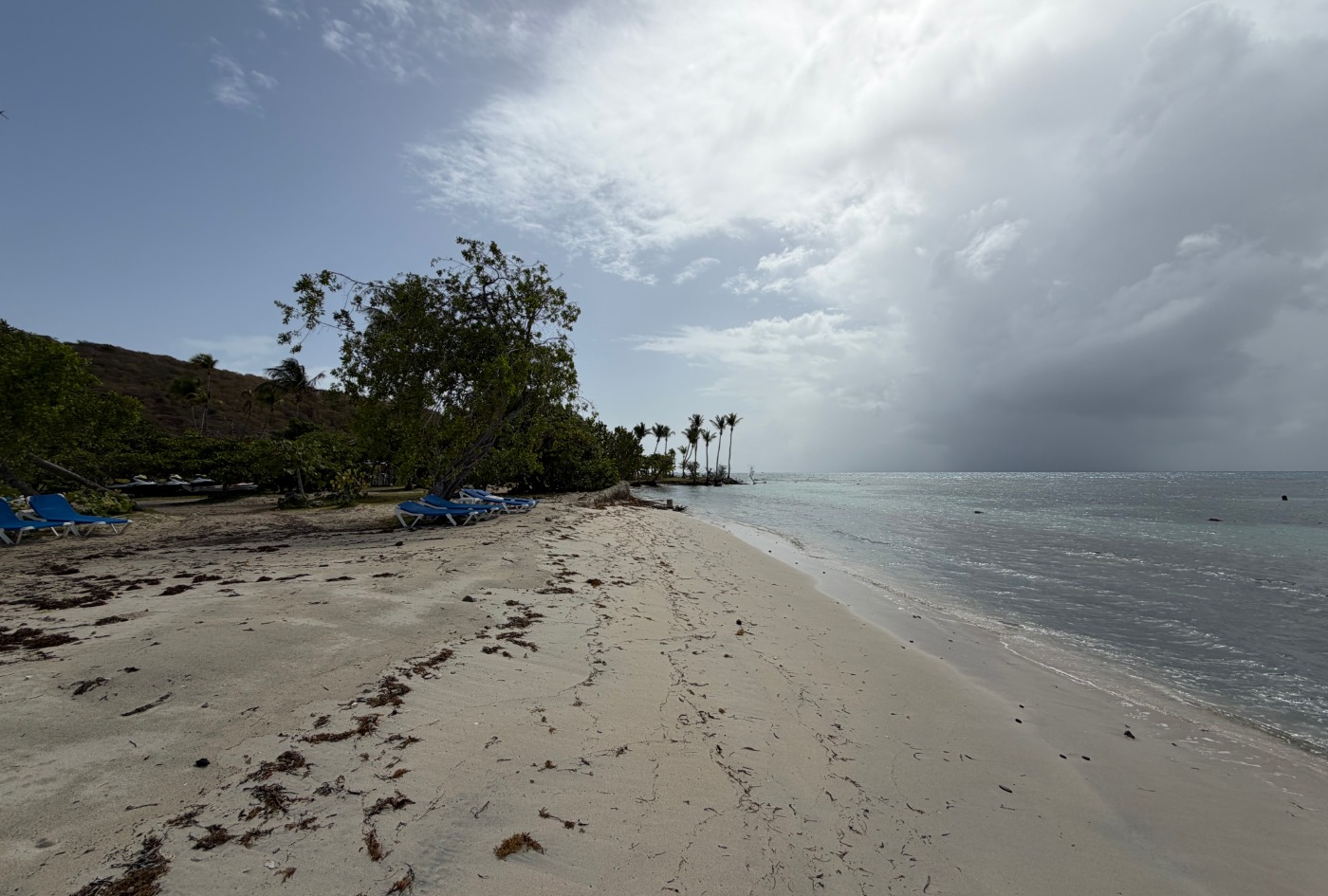
Worth spelling out: in Puerto Rico, beaches are public domain, full stop. The principle traces to Spanish maritime law and lives today in the Puerto Rico Dock and Harbor Act (“Ley de Muelles y Puertos,” Act No. 151 of 1968), which defines the zona marítimo-terrestre — the strip the sea reaches in normal tide and storm surge — as bienes de dominio público: property of the people. No hotel, no family, no operator owns the sand the tide reaches, whatever the brochure says. “Beaches belong to the people” isn’t a slogan here — it’s been an active legislative fight this year, with environmental groups fighting bills that would redraw the zone and shrink what’s public. Palomino is no exception: the beach where the water reaches belongs to the public by law. The Bachman family’s ownership and El Conquistador’s lease cover the land above that line, not the beach itself.
Not a scandal — plenty of resorts lease adjacent land. But it means one of El Conquistador’s signature amenities depends on a private family’s lease terms, not the resort’s own real estate. If that relationship soured, or the family sold or redeveloped, the “private island” experience that headlines half the marketing could vanish for reasons that have nothing to do with hotel management.
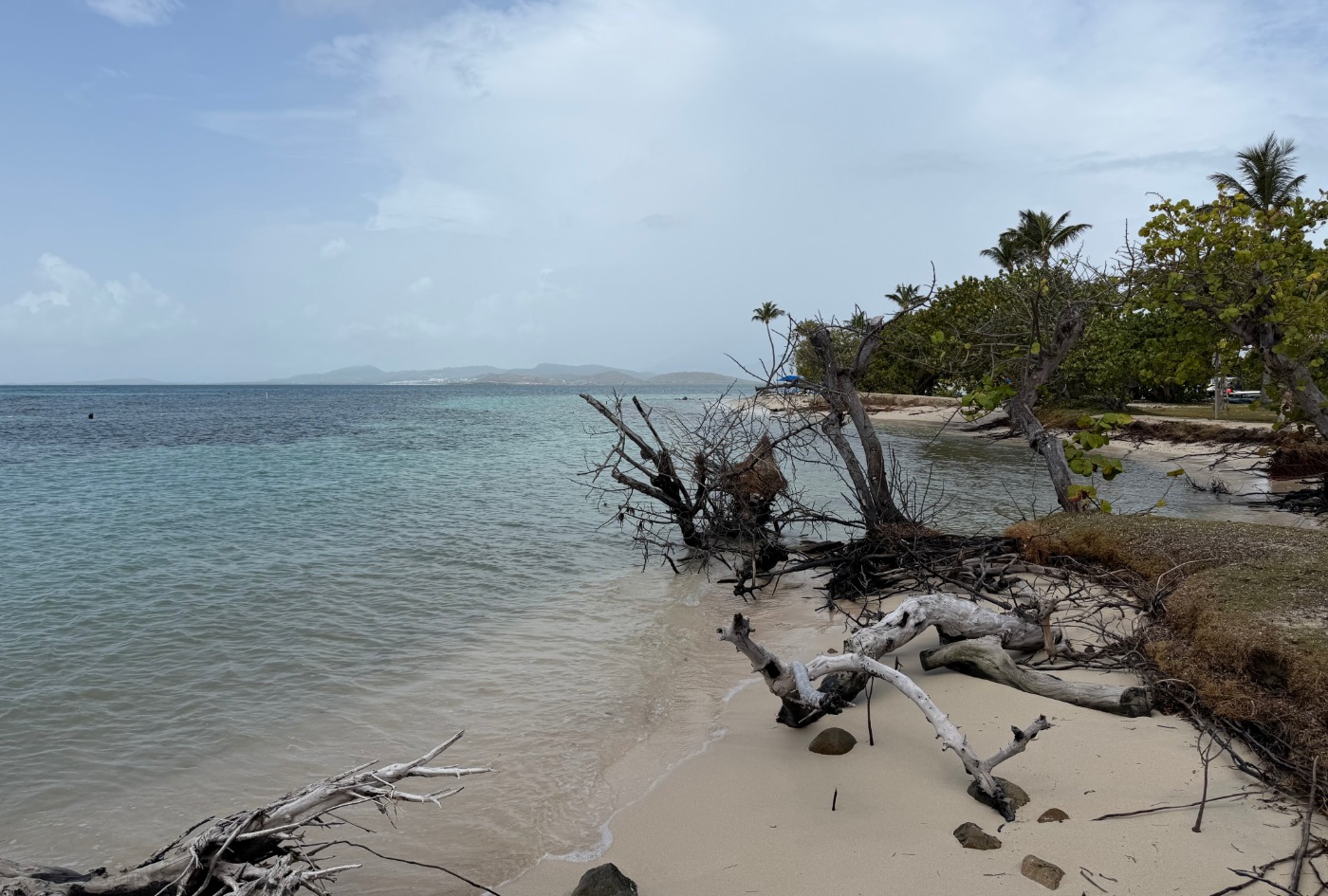
I have to step out of investigative mode here, because this trip wasn’t only reporting. We went to Icacos a lot growing up. For years El Conquistador threw a huge New Year’s Eve party on Palomino, and my dad and his friends turned it into a camping trip — he and I slept in a tent right on the beach, the rest of the crew spread between their boats and their own tents. Days, we ran the dinghy between Icacos, Palomino, and a little cay just south of Palomino called Palominito.
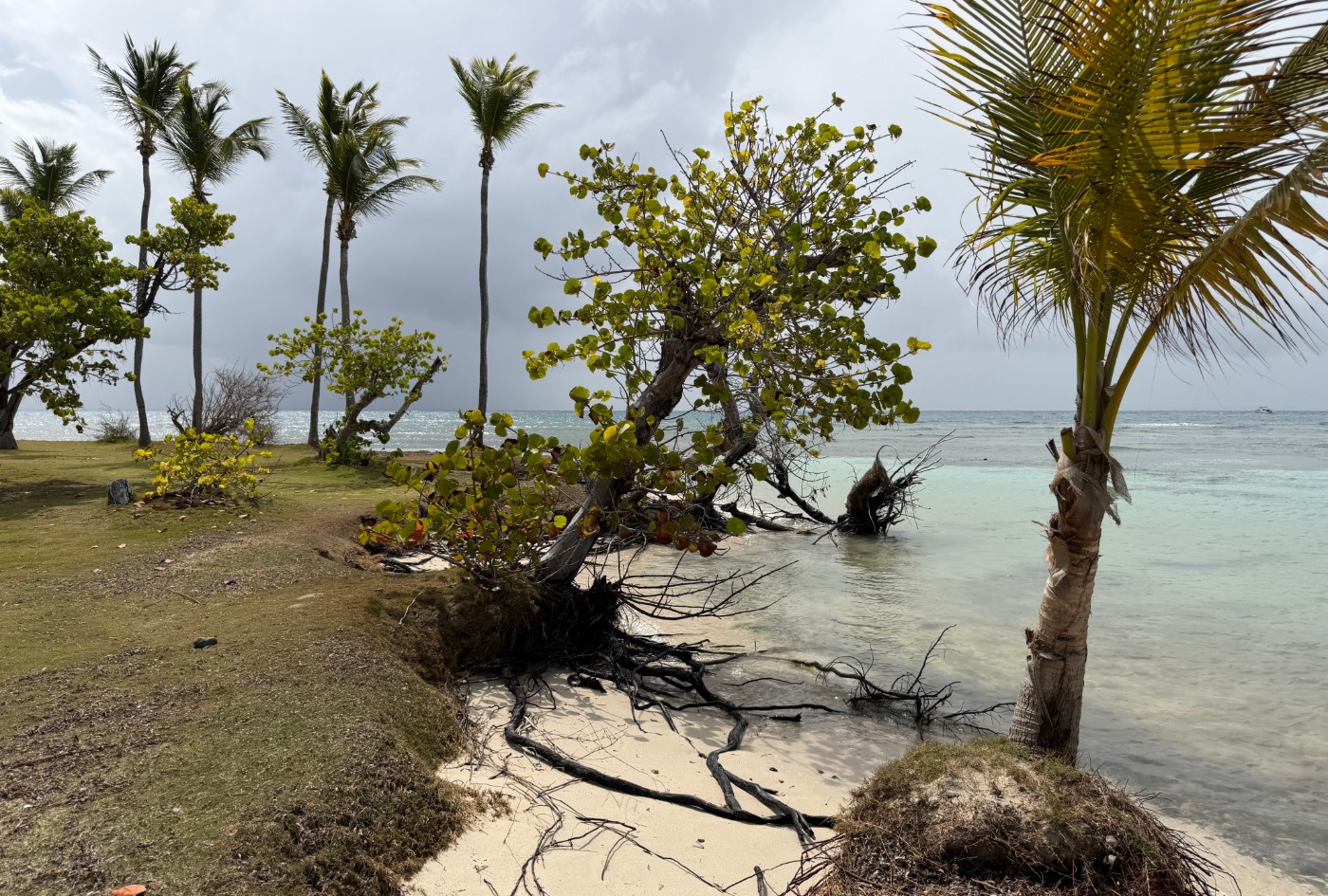
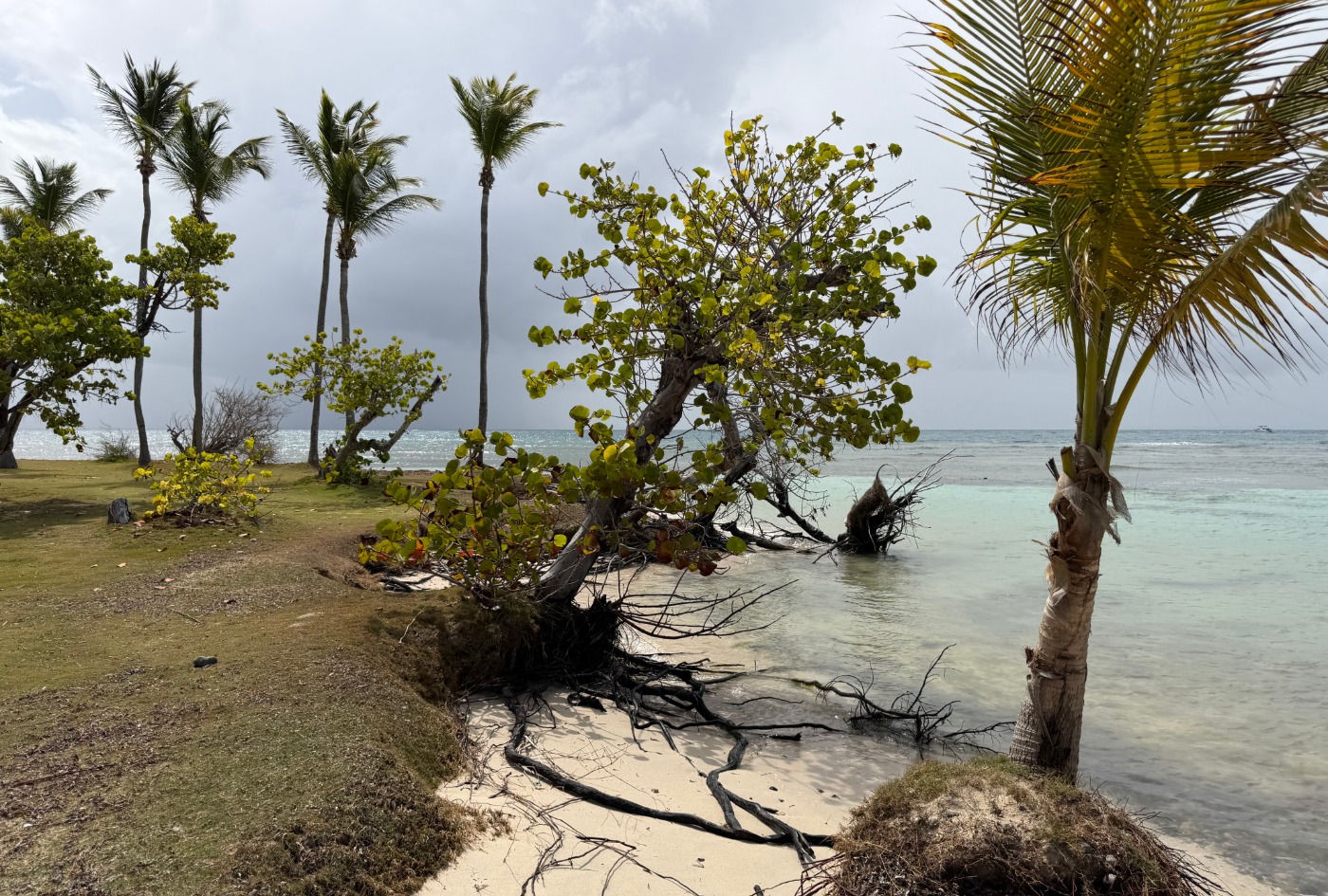
Palominito is more than a footnote. For decades it was a real, walkable island — palms, white sand, its own postcard — and a lot of Puerto Ricans who grew up boating out of Fajardo carry the same memory. It’s documented, not just nostalgia: geologists tracked its erosion years before Maria, some pointing to high-speed ferry wakes from the Culebra route as an accelerant. Maria hit it hard in 2017, and within about a year, Palominito was gone — sunk back into the sea it came from. For a lot of us, that’s a real loss: an island generations of Puerto Rican families grew up around simply isn’t there anymore.
I’m not saying this to pad a review. It’s why Palomino’s ownership matters to me past the reporting angle. Access to it depending on a private family’s lease isn’t a business detail to me — it’s access to a place that shaped who I am, and held some of the best time I ever spent alone with my father. Not a knock on El Conquistador. If anything, it’s the best argument for getting that relationship, and the upkeep of what’s left, right.
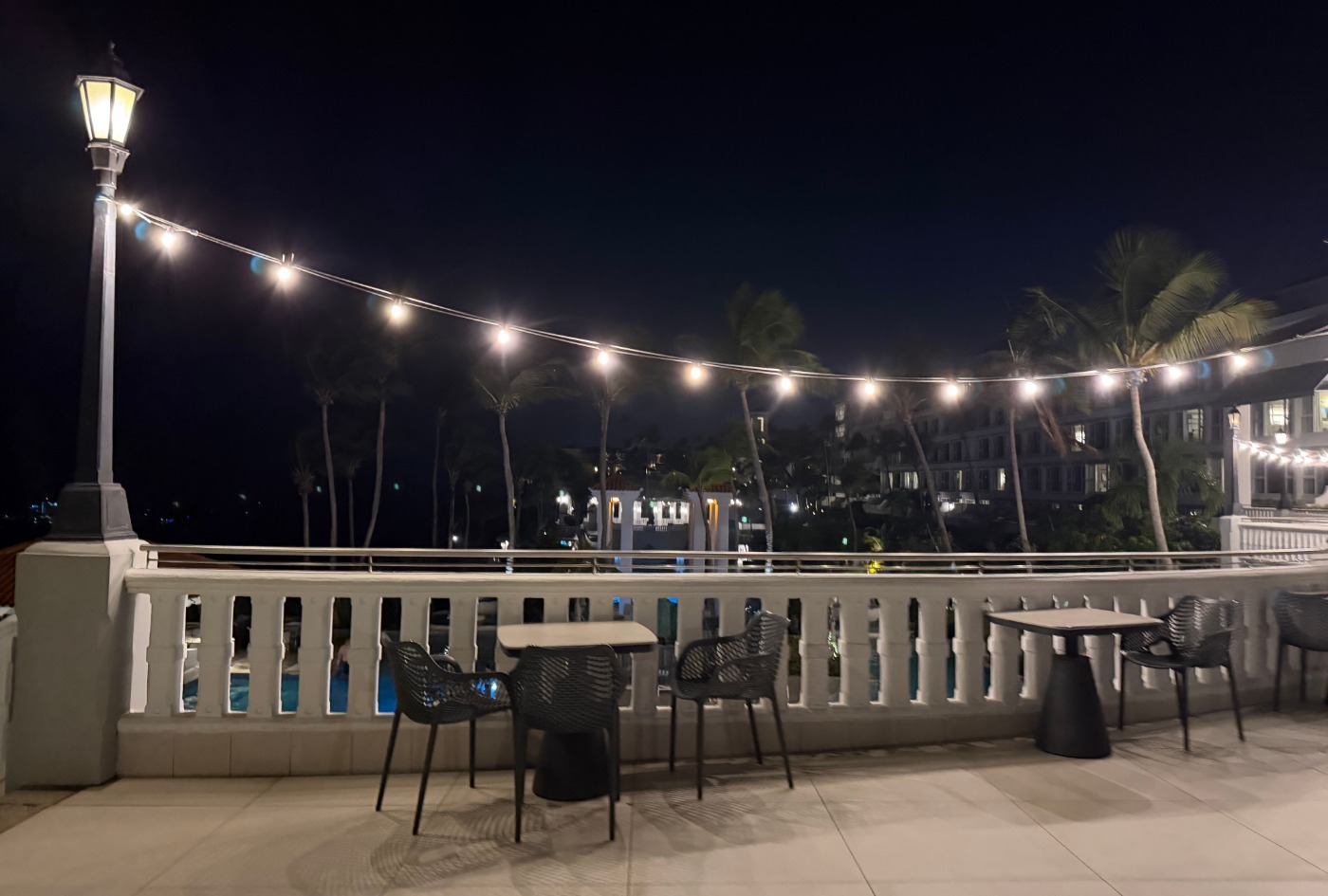
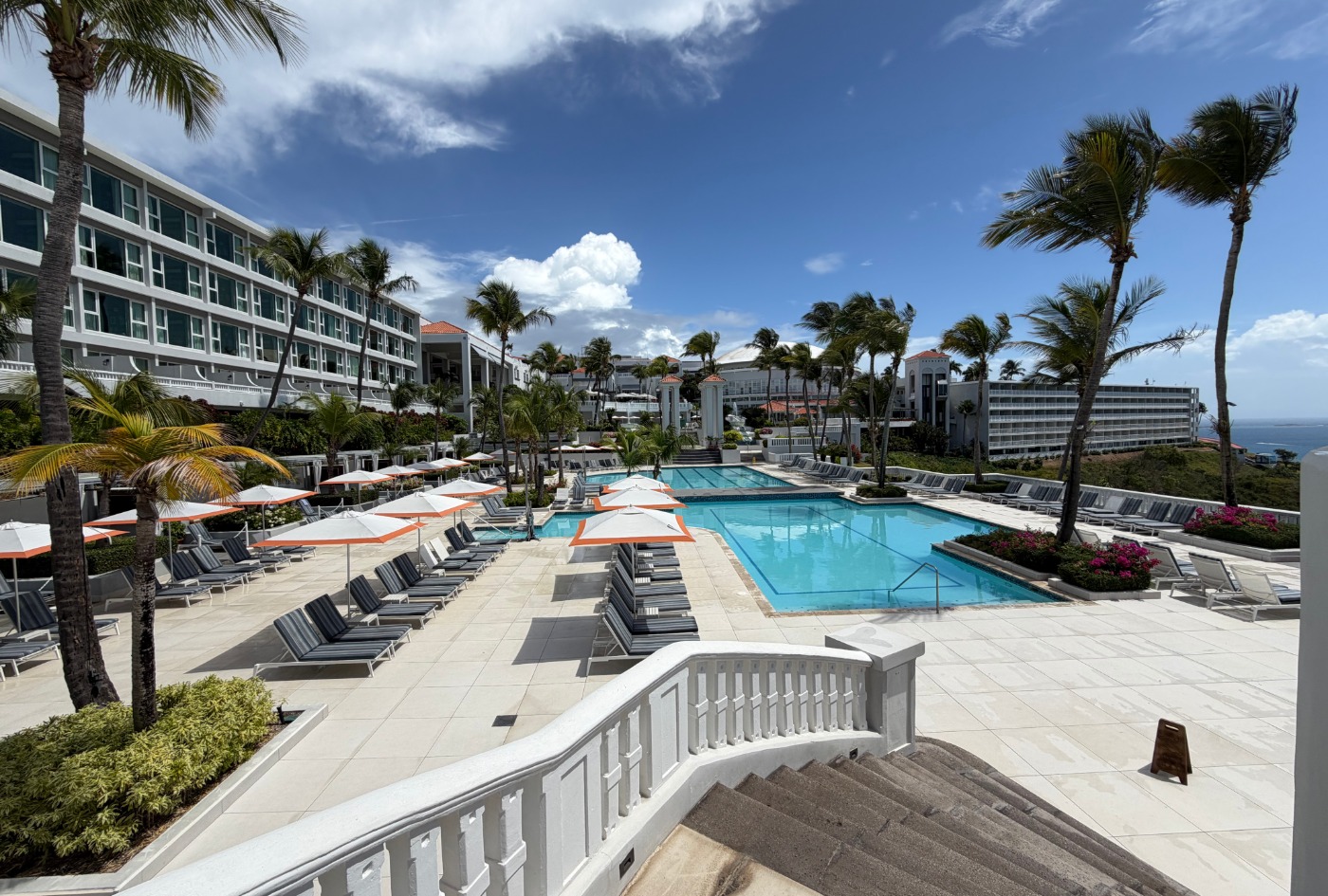
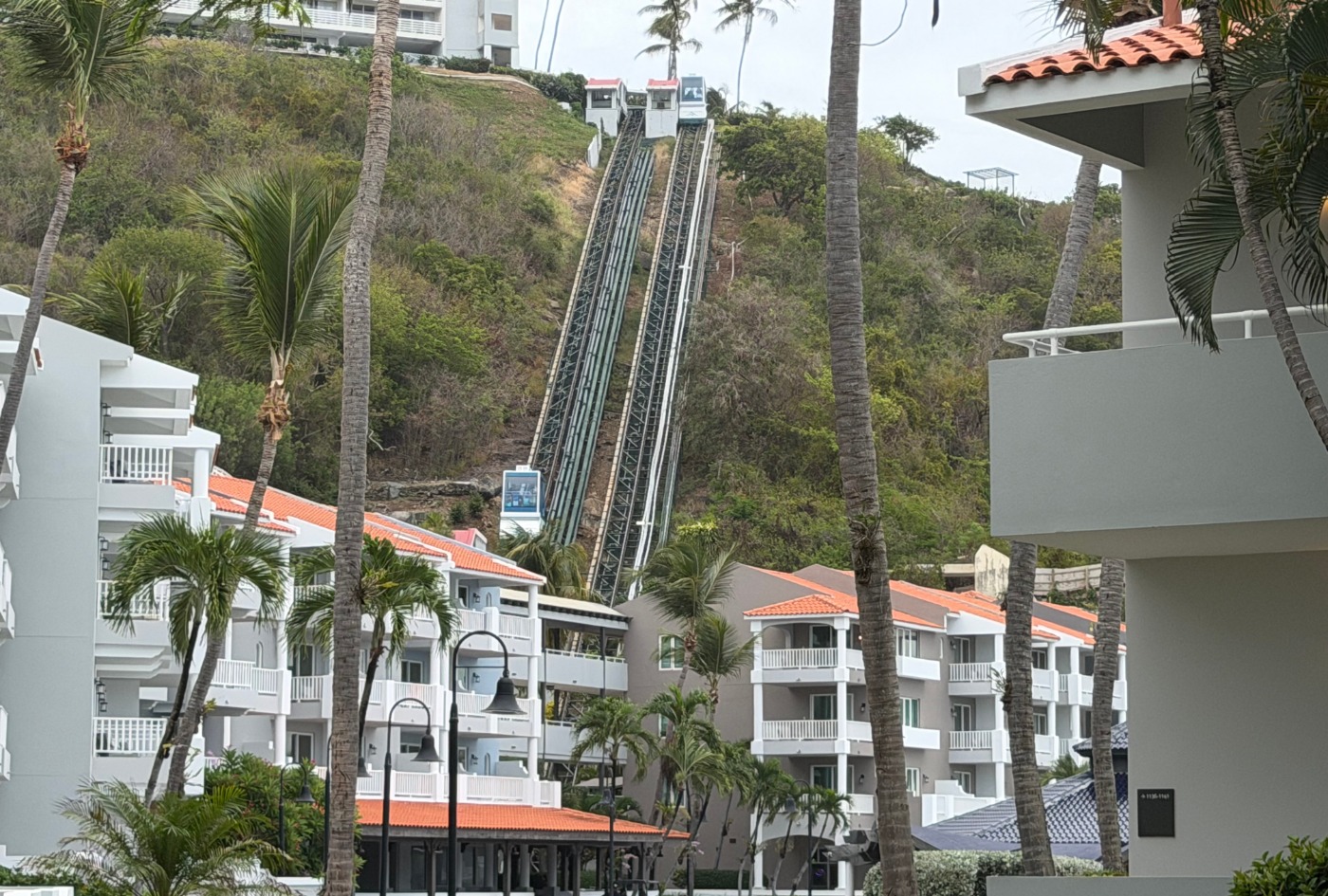
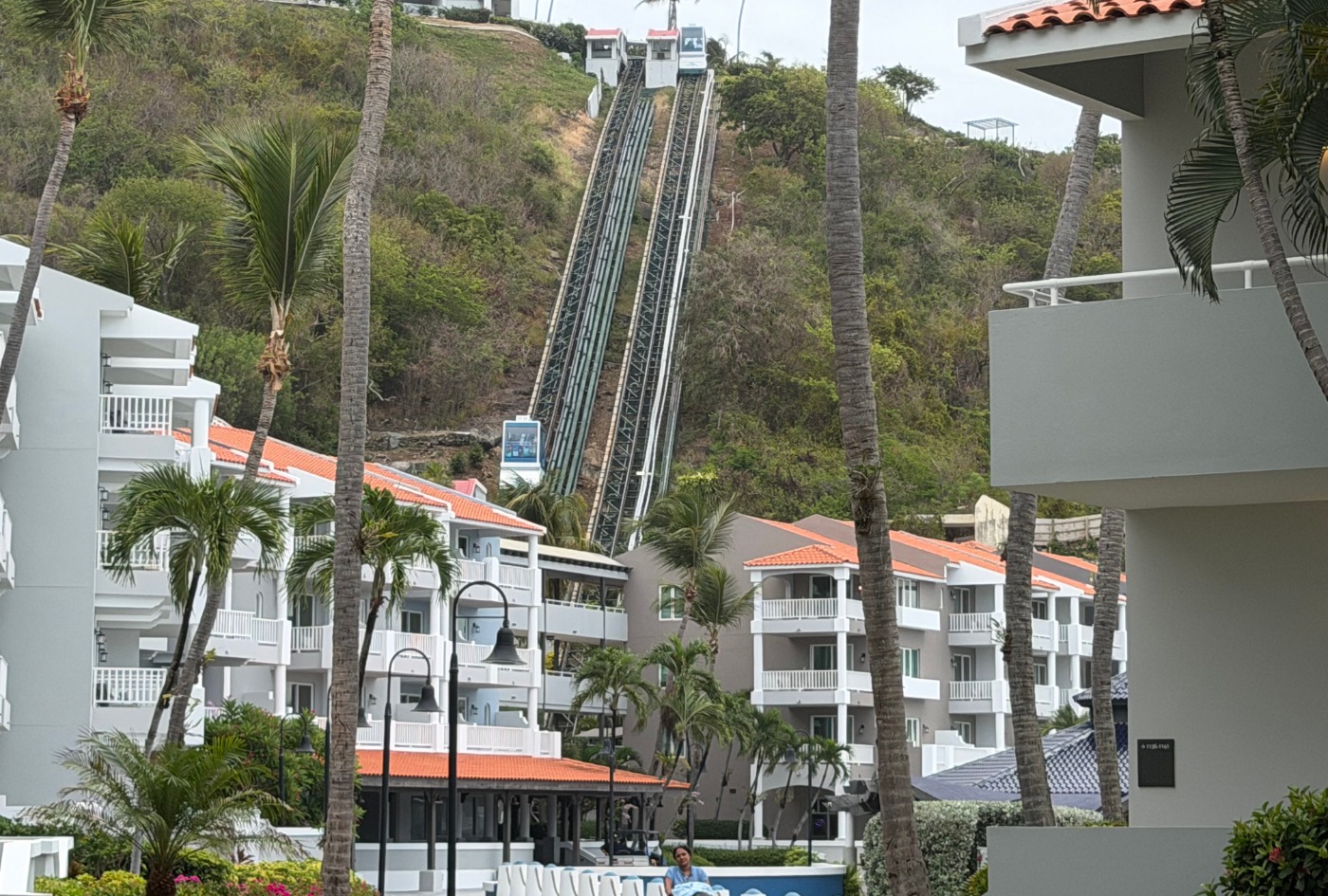
Look at the property map and you see the problem before you arrive: golf and tennis up top, villas cascading down a hillside, then a steep drop to the marina, spa, and water park at sea level. The funicular — a signature since the 1968 expansion — exists because walking that grade with luggage, kids, or a hangover isn’t realistic. Not literally 45 degrees, but you feel every foot of it.
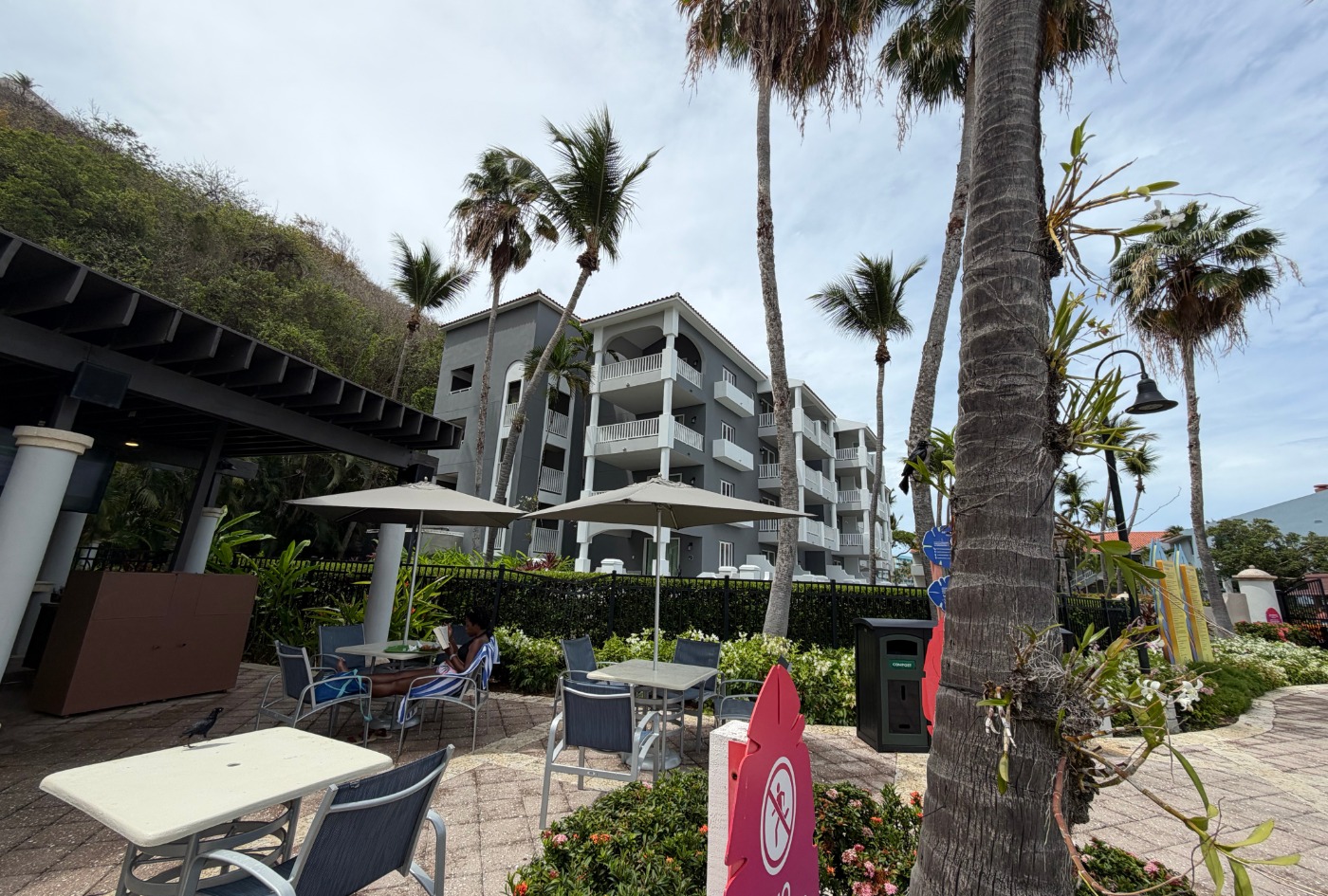
That geography is where the property’s split personality lives. The upper villages — Las Vistas, Las Brisas, the golf side — feel current; that’s where the post-Maria money visibly went. Toward the marina and the lower tram stops, things feel a notch more improvised: service stretched thinner, common areas still “getting there.” Nothing felt unsafe, but you can feel where the budget went first.
I also photographed active construction beside the funicular route, above the marina. Multiple employees, independently, told me it’s becoming a new adults-only section. No official name, design, amenities, or opening date confirmed — nobody I spoke with had that, or would share it. So: a real site, a consistent staff story, nothing more confirmed yet.
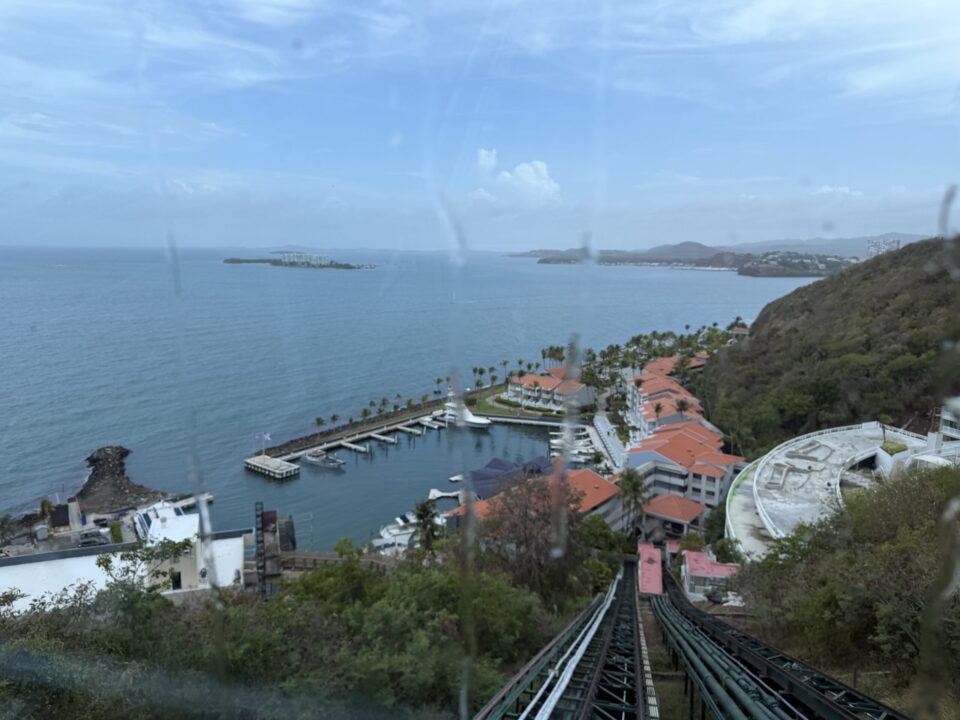
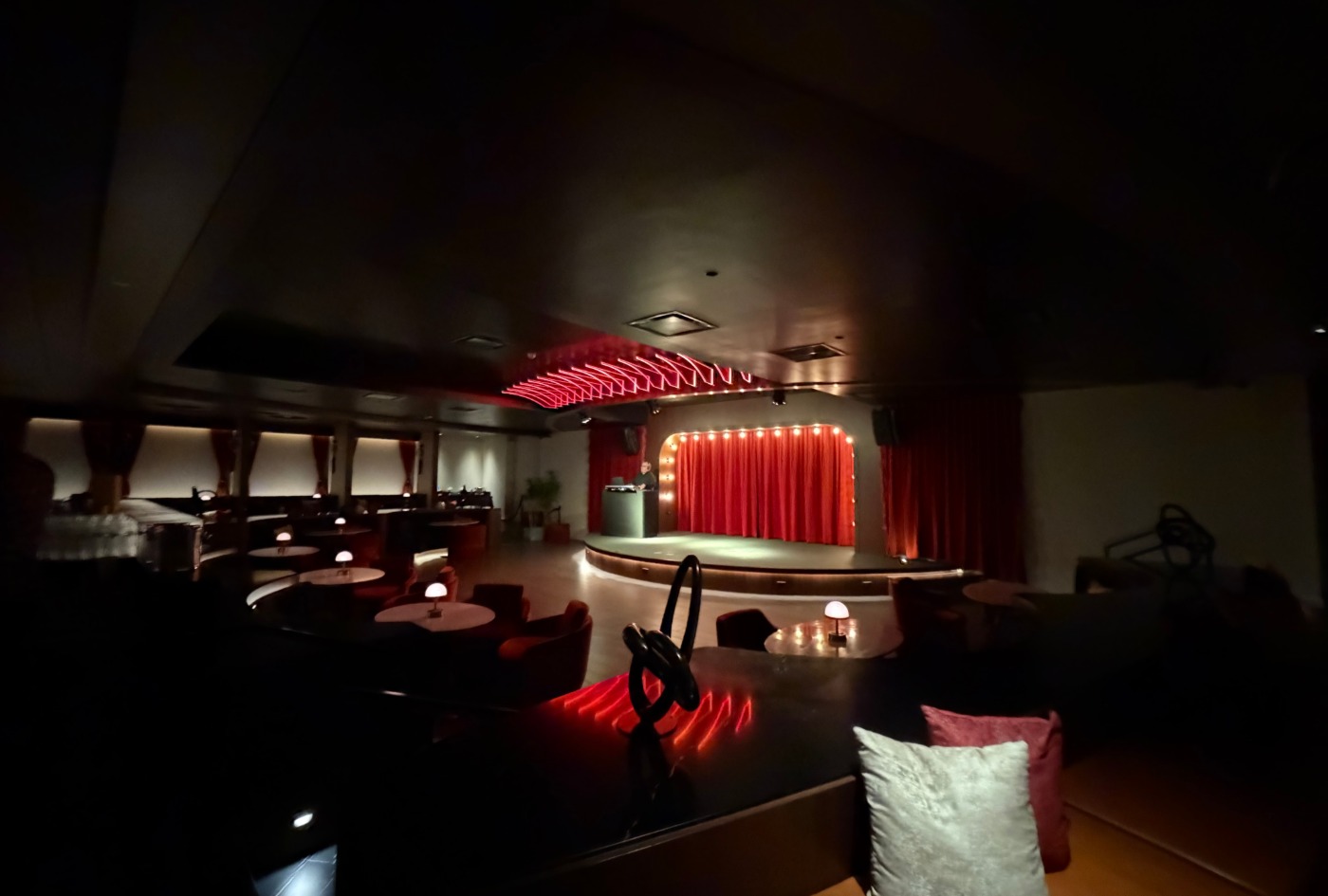
This tracks with something bigger happening here in 2026. Between an existing adults-only bar (Casa Blanca), a members-only retreat and room tier in the works (Olas / Las Olas), and now this unconfirmed build, El Conquistador is layering new, more exclusive experiences on top of the rebuild. This place isn’t just being restored. It’s still becoming something else.
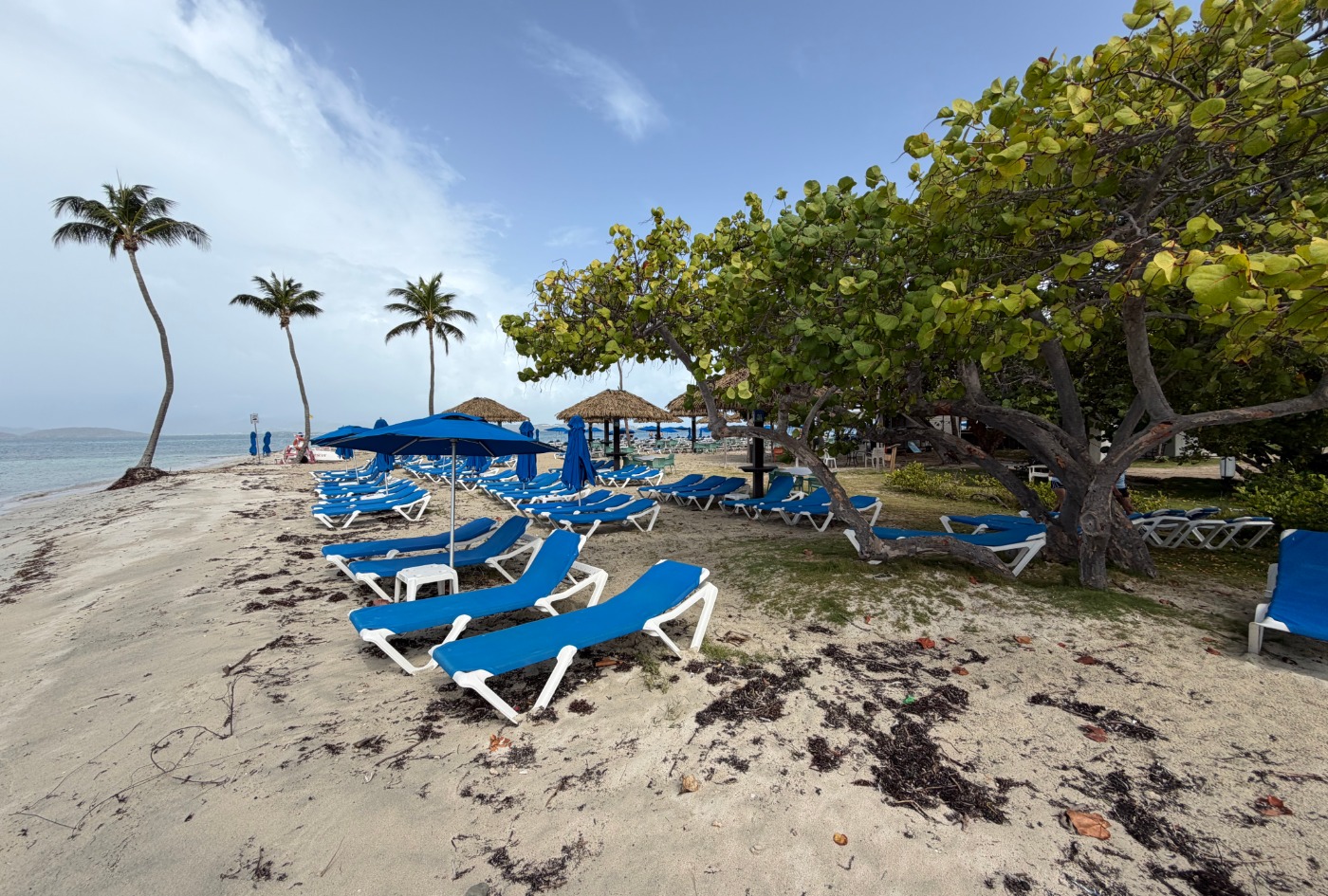
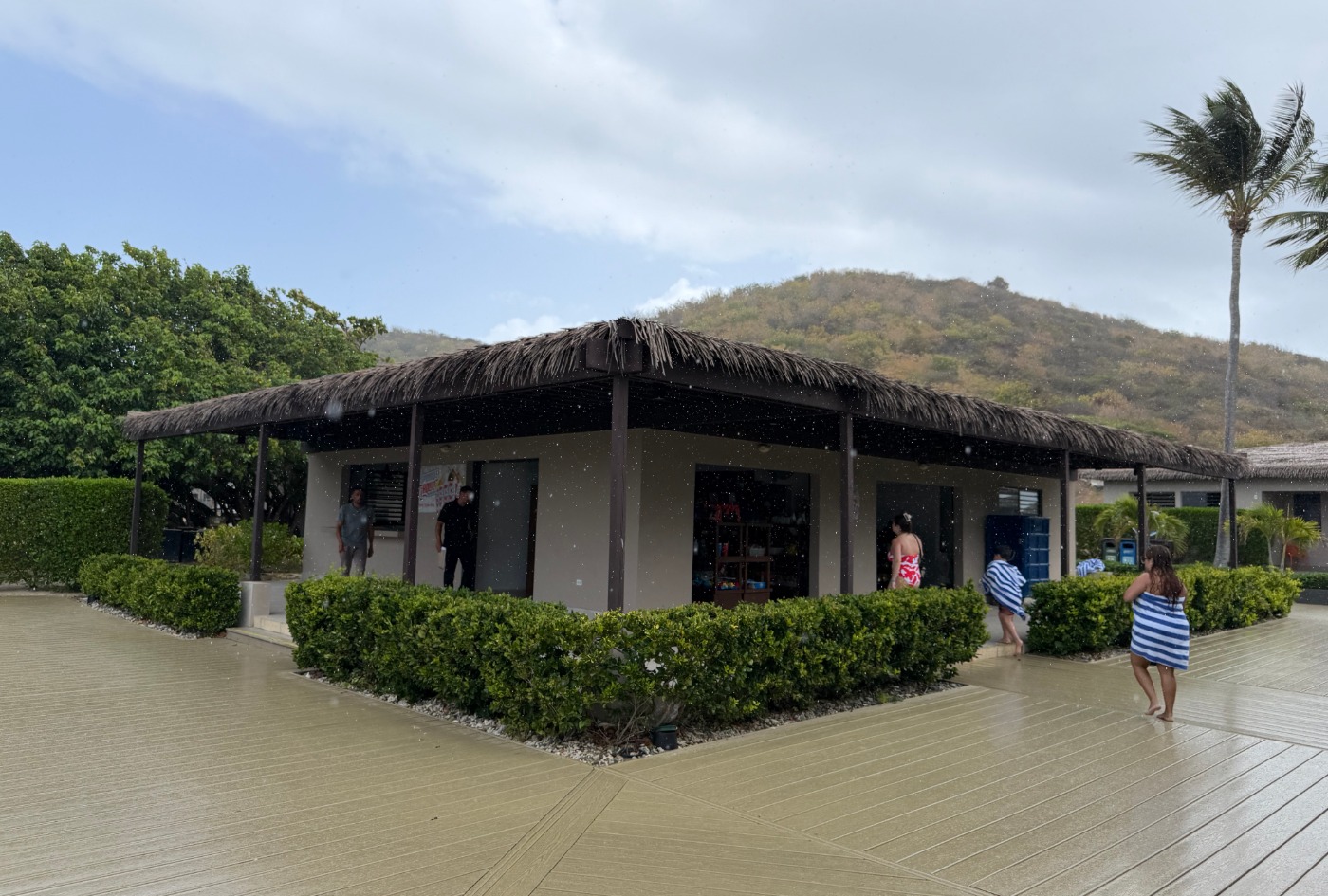
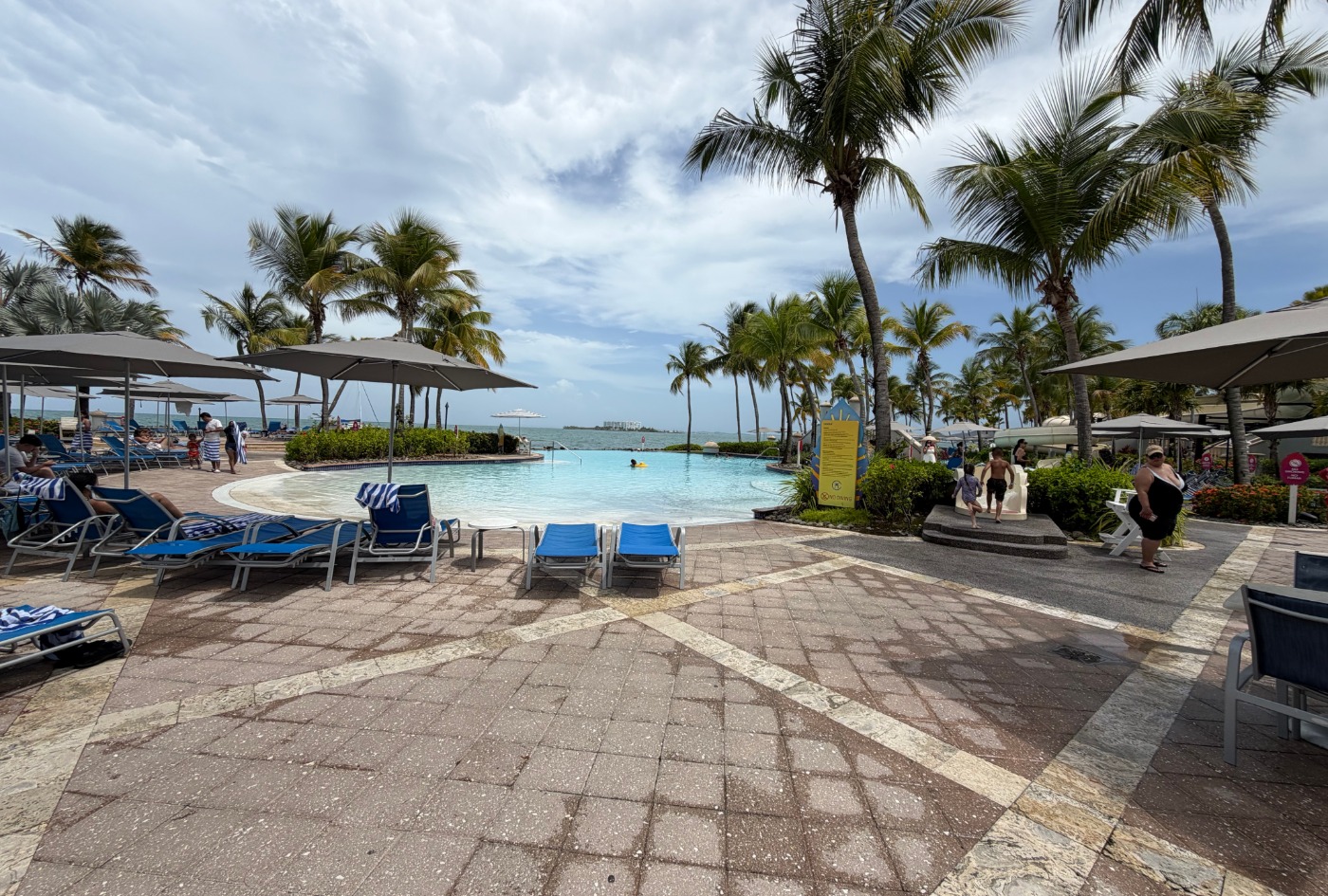
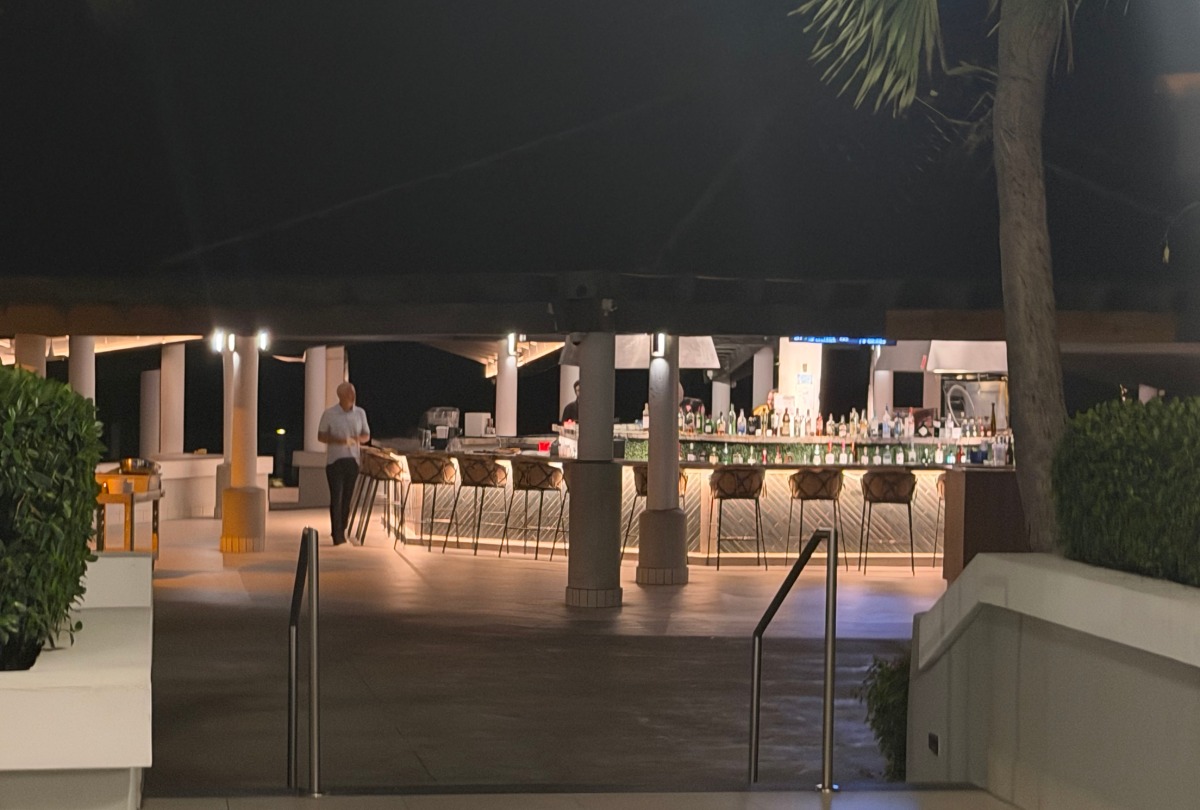
The other terrain risk is the weather, and it moves fast. I got to Palomino around 11 AM — full sun — and within the time it took to settle in, a squall flipped the whole afternoon. We rode it out at the island bar, which turned out to be one of the best parts of the trip: big, covered, and staffed by people who were genuinely great — shoutout especially to the women behind that bar. One real problem: the towels hadn’t made it over yet, so once the rain hit, everyone was soaked with nothing to dry off with, and it got uncomfortable fast. The towels sat right there on the boat at the dock, but nobody could unload mid-storm for safety. One bartender wasn’t having it — she went out to the boat herself, got them unloaded, and came back and put the first towel in my hands. That tells you more about a property’s staff than any polished restaurant service.
08 Staff: The Best Part of the Trip, With an Asterisk
Every single interaction I had with staff — front desk, restaurant servers, the people running the Coqui Water Park, the ferry crew to Palomino — was warm, attentive, and clearly proud of the property. That’s not a small thing at a resort this size, and it’s the single biggest reason this review isn’t lower than it is.
It also tracks with what employees say about working here, once you go looking. Reviews on Indeed and Glassdoor paint a genuinely mixed picture: plenty of staff describe strong camaraderie, supportive day-to-day management, and pride in “the scenery” and “the best time of my life” working conventions and weddings at what one reviewer called “Puerto Rico’s largest event resort.” But the recurring complaint, in both English and Spanish reviews, is pay — described repeatedly as too low for the workload, with limited paths to advancement and a heavy reliance on part-time scheduling that keeps some longtime workers from qualifying for full benefits. Glassdoor’s aggregate has the property around 3.6 out of 5 from employees, with roughly two-thirds saying they’d recommend working there to a friend.
That’s a very normal resort-industry tension — guests get the best version of people who are, by their own account, underpaid for it — but it’s worth naming rather than pretending the smiles are free.
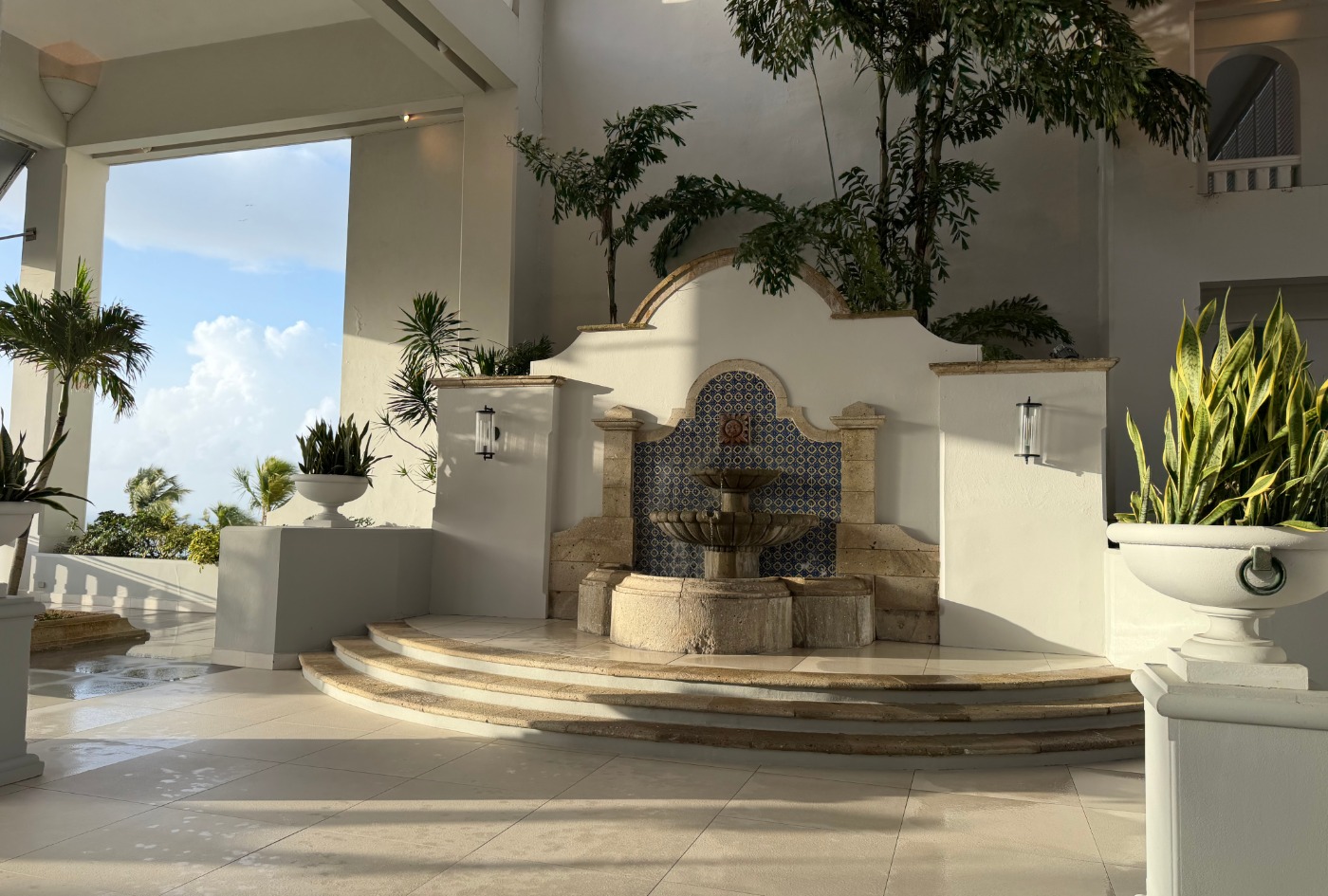
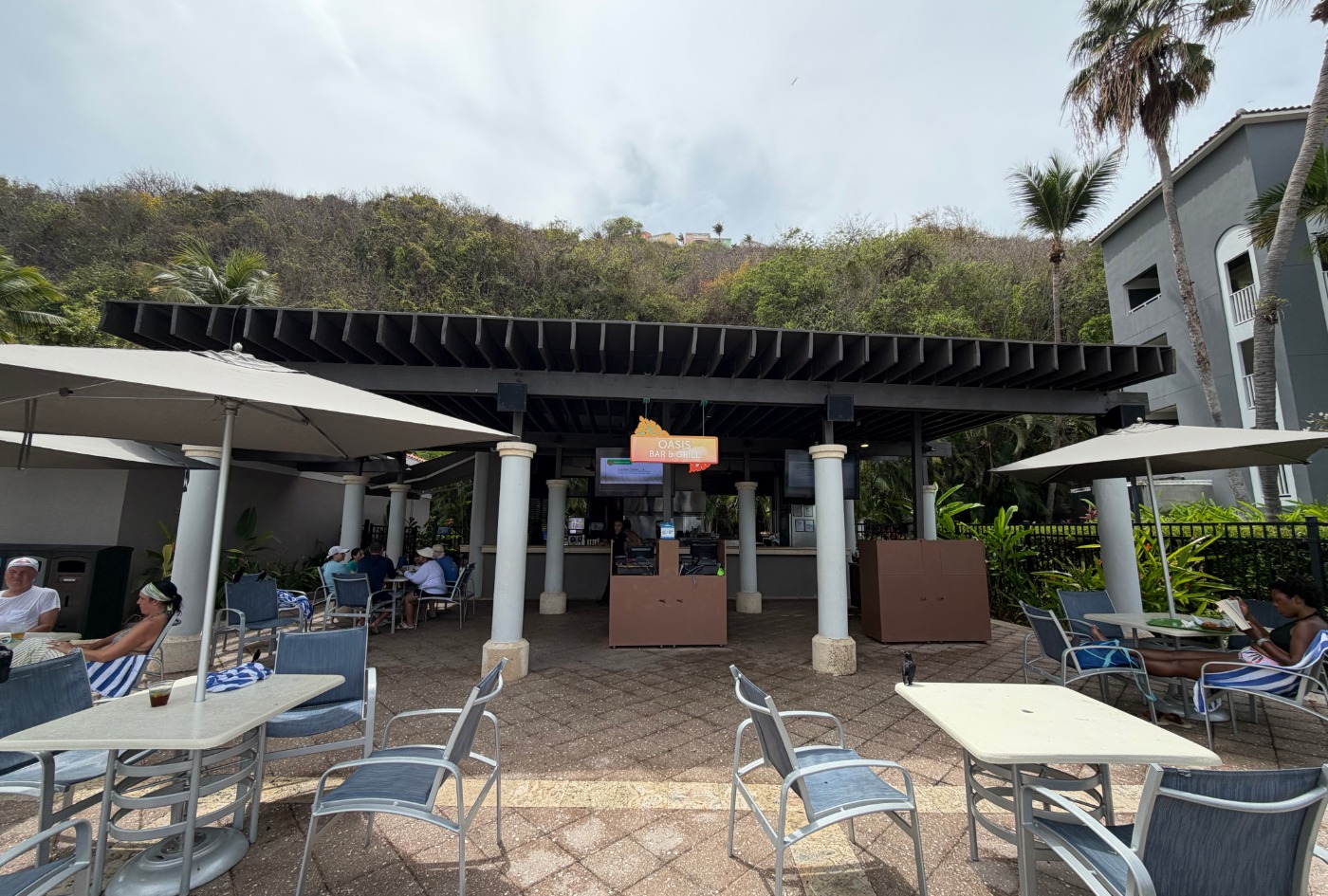
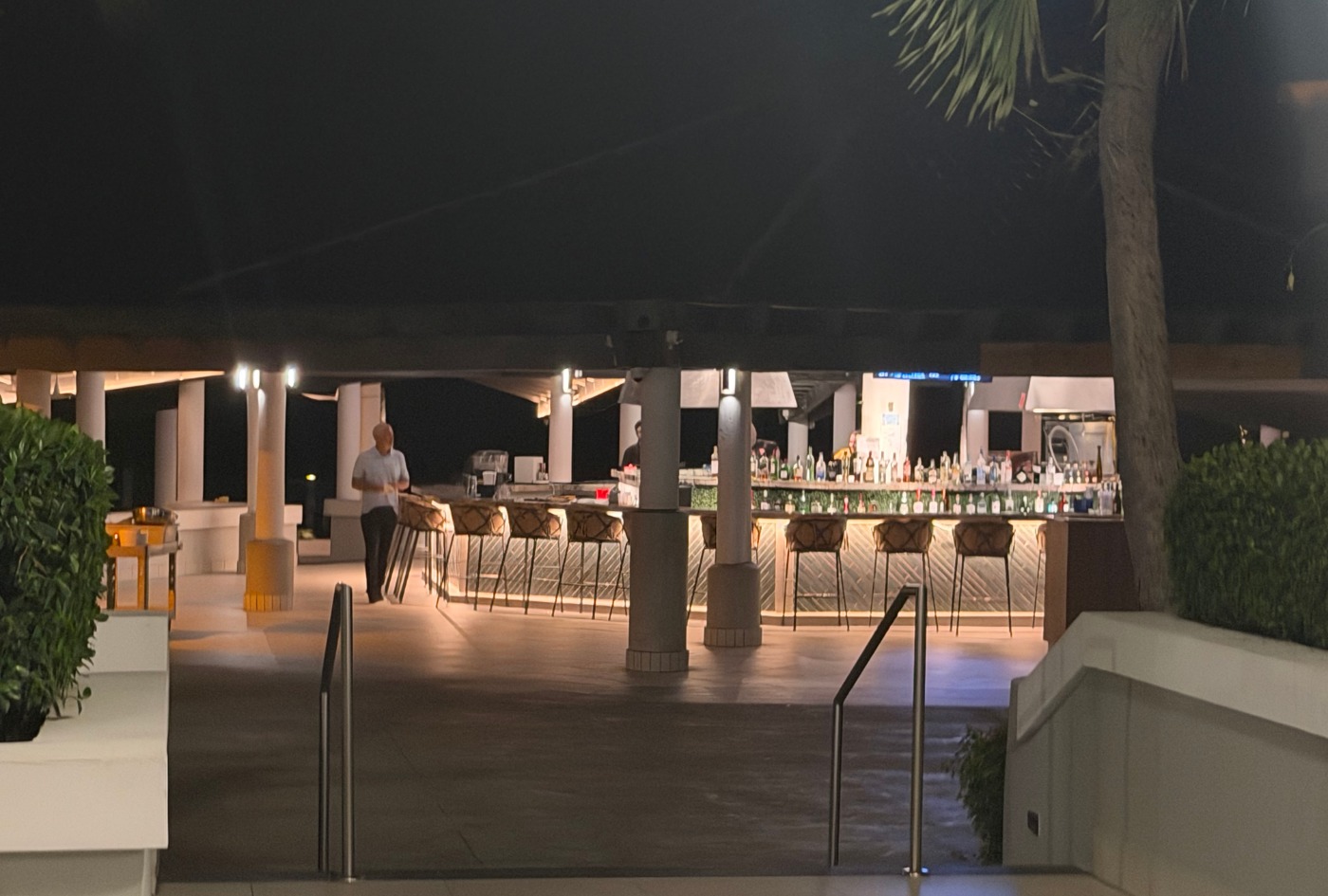
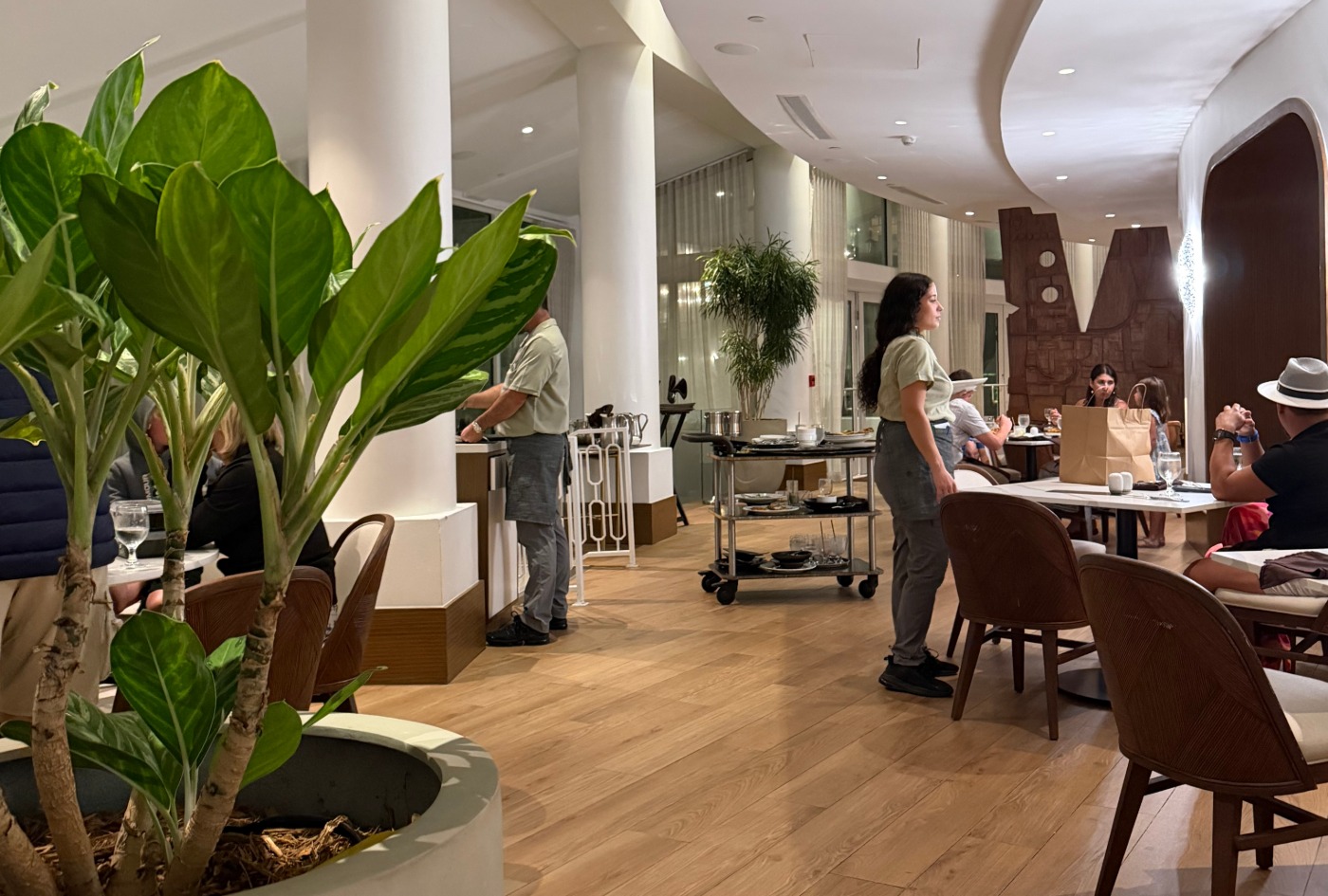
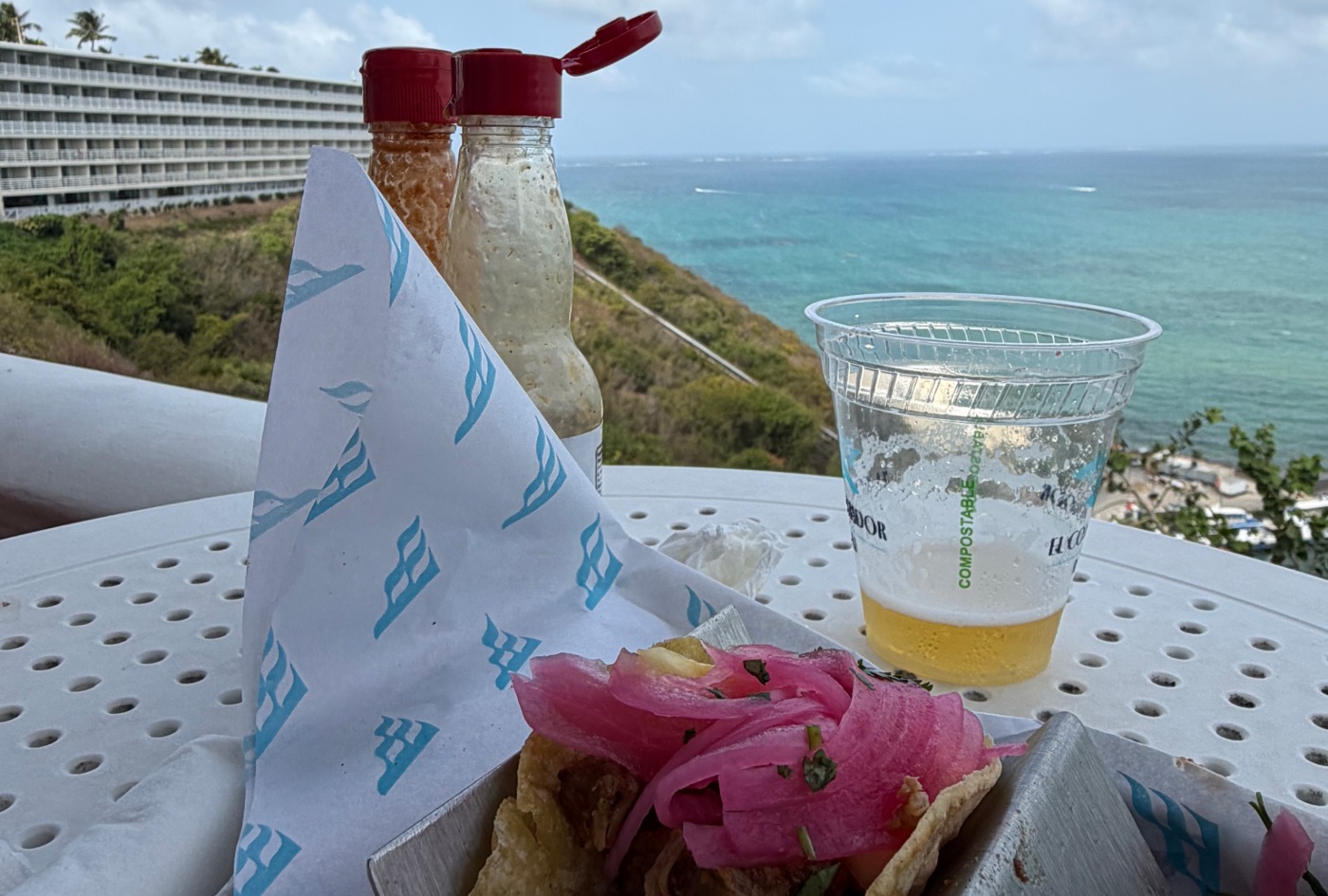
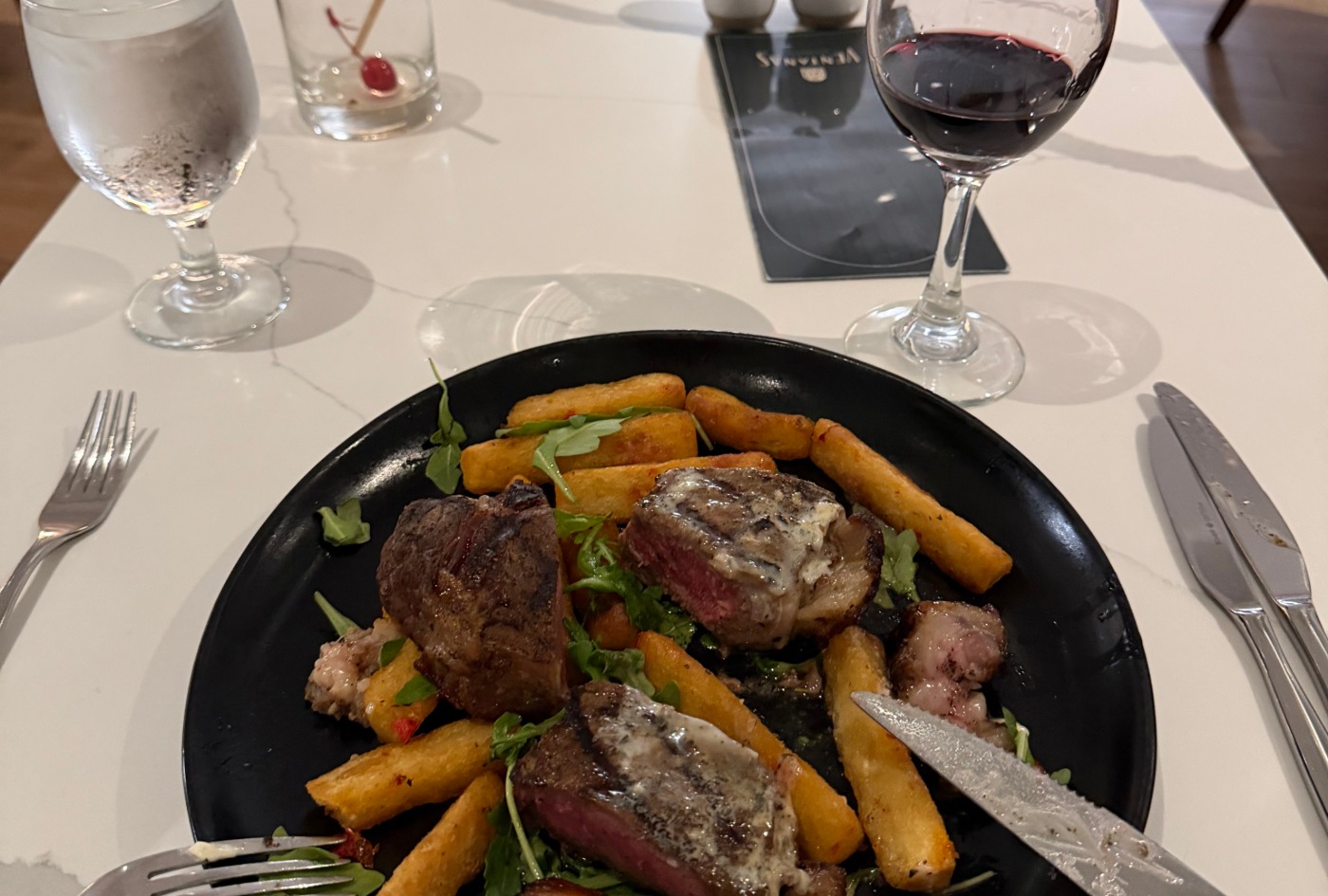
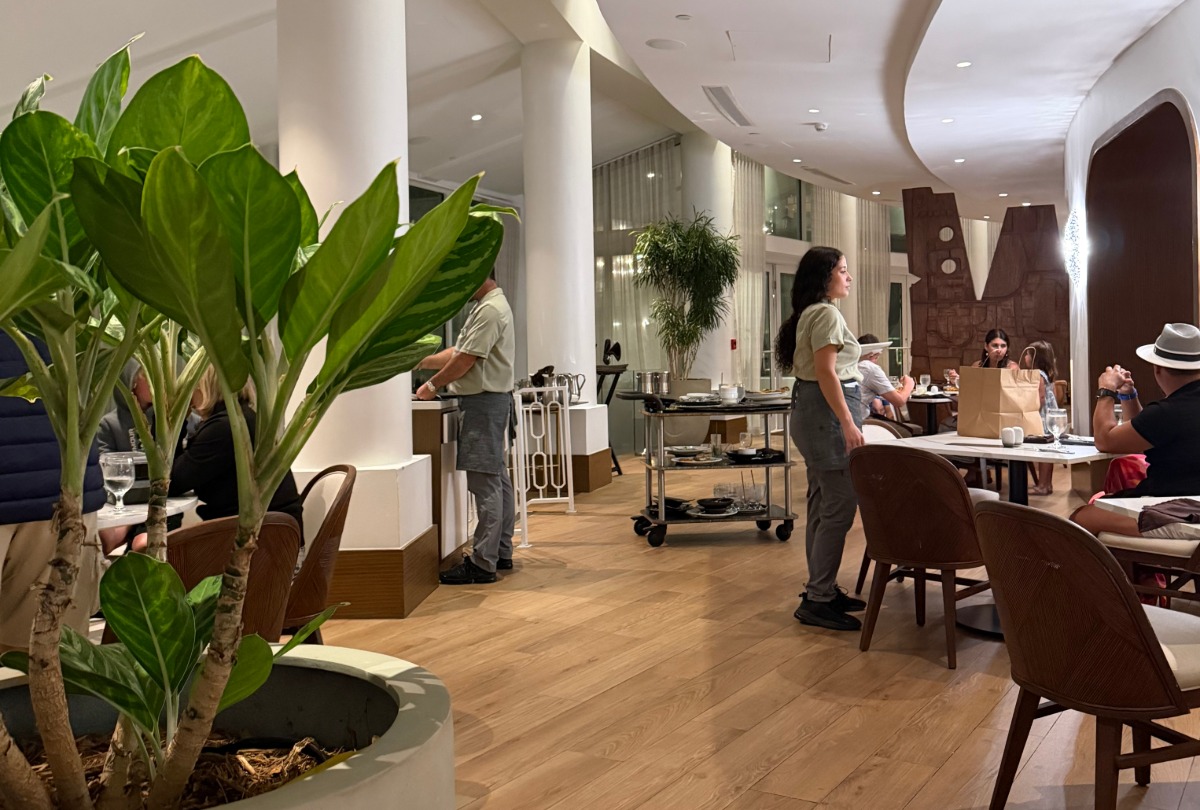
We ate at most of the on-property restaurants. The spread is genuinely impressive for a resort this size, leaning into the Mediterranean-meets-Puerto-Rican identity the post-Maria rebrand has pushed.
CASUAL · POOLSIDE
MARINA · SEAFOOD & BAR
CASUAL · AL FRESCO
CAFE
El Cafecito
Pours Café Alto Grande, the premium PR coffee a lot of island resorts lean on — bright, not bitter, worth it. Also a case study in a bigger trend: resort coffee here is creeping toward $8–9 for 16 ounces before tip. Good for post-funicular mornings; budget for it.
POOL & BEACH
BAR
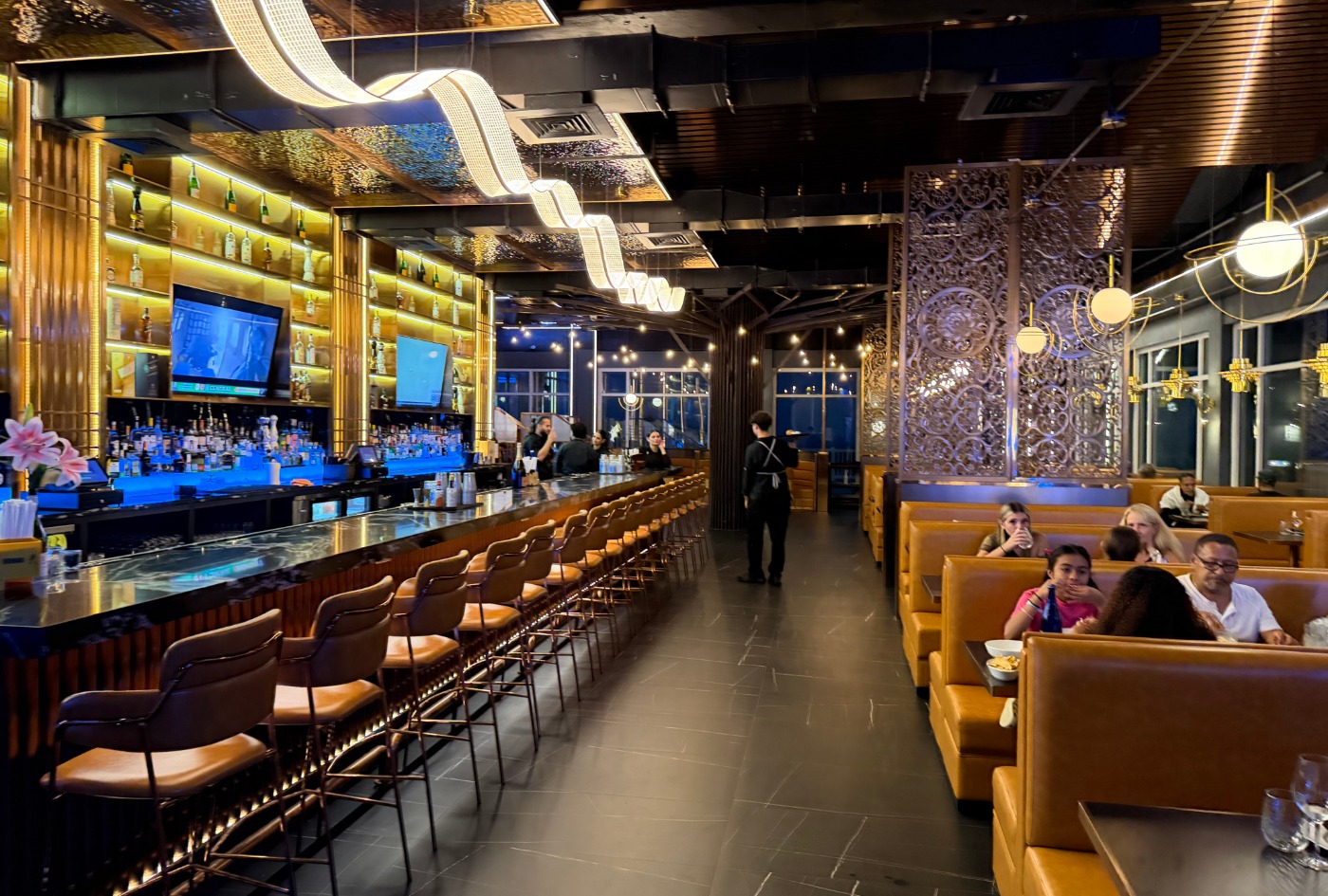
Nothing was a letdown, and nothing but maybe Ballyhoo’s bites made me write home about it. The Mirador Level — Ventanas’ neighbors Cutz and Okinawa — is a different story.
This changed how I ate for the rest of the trip. The Mirador Level — home to Cutz Steakhouse and Okinawa, the sushi-and-teppanyaki spot — had a visible, smellable mold problem. Bad enough that the property had someone stationed there with a mop, working the same stretch of floor over and over — that reads like active moisture control, not routine cleaning. I have a real mold sensitivity. I didn’t eat in either restaurant again.
I checked independent reviews to see if I was alone. I wasn’t. Similar complaints — mold on ceilings, in bathrooms, in hallway carpet — show up across several years, including a January 2026 guest describing a “strong musty/moldy smell” on the Brisas wing’s second floor, with carpet powder apparently masking rather than fixing it. I can’t say what’s causing it — that takes building-science expertise, not a bad reaction — but it’s a recurring complaint, not a one-off.
Blunt time — this publication doesn’t let a good view soften a low score.
The elevators. More than one, across more than one building, made sounds I wouldn’t want to hear on a plane. Nothing failed on me. But at a property that’s spent $220 million-plus on renovations, elevators shouldn’t still groan like that in 2026.
The lower property. The marina level and water-park-adjacent areas run a beat behind the upper villages — busier, more chaotic, service stretched thinner. Other reviews back this up: one guest described the resort running “like a nightclub 24/7,” music bleeding across pool, water park, beach, and restaurants at once, calling it “oppressive” near the marina corridor. I didn’t get it that intensely from my room, but I believe it — sound depends on where you land, and where you land is mostly luck.
The scale itself. The property’s sheer size can work against you. Land in a bad wing, or far from the funicular, or in the “lower part” during a busy week, and this stops feeling boutique and starts feeling like logistics in a small resort town. Not automatically bad — just not what the marketing photos promise.
One thing worth crediting, right in the middle of all that. Over the past month I stayed at roughly five Puerto Rico hotels during the island’s ongoing water-service crisis and the LUMA power outages that have become routine in 2026 — the Vanderbilt, the Sheraton Puerto Rico Convention Center Hotel, Alma, El Conquistador, a few others I’m blanking on. Every one, El Conquistador included, had solid water pressure and never lost power or water. My honest read: outages generally aren’t the guest-facing problem at hotels that they are at Airbnbs right now — hotels have the cisterns, generators, and water tanks to buy around the crisis, even if it means quietly spending a lot to do it. That’s real money, and it’s a cost this whole island’s hotel industry is eating right now, El Conquistador included.
Royale Blue Hospitality is privately held — no public earnings report. What’s visible reads like confidence: room count climbing from 230 (2021) to roughly 677 today to 750 by end of 2026; a signature restaurant buildout in 2024; World Travel Awards recognition as “Puerto Rico’s Leading Resort” in 2008, 2015, 2016, 2019, and 2024.
The clearest numbers come from a published Amadeus Hospitality case study on the resort’s tech partnership — worth stating exactly as reported, not as audited financials. Per that case study, attributed to El Conquistador’s own Director of Sales & Marketing using the resort’s iHotelier data: direct booking rate went from 22% to 46% in the resort’s first three years as a fully independent property; ADR returned to 2019 levels; every booking channel grew an average of 28% year over year; brand.com bookings and revenue grew 65%; OTA reliance dropped 16%. Self-reported, vendor-published figures — not audited — but specific, dated, and attributed to a named executive, which puts them above marketing copy.
Review volume backs the trajectory — thousands of recent reviews clustering around 9/10. None of that proves profitability, but together it reads like a business growing, not struggling.
FINAL
The Verdict
6/10
Worth it, with eyes open
El Conquistador earns real points for the one thing you can’t fake: location. Three hundred feet up, where the Atlantic meets the Caribbean, with a private-ish island a ferry away and staff who genuinely like their jobs even while underpaid for it — that combination is hard to find anywhere in the Caribbean. The comeback story is real, the ownership shift from a Wall Street giant to Puerto Rico-based ownership and operations is genuinely compelling, and getting upgraded into the literal original 1962 wing felt like being handed a piece of that story.
But a 64-year-old property rebuilt twice from near-total loss still has seams showing, and $220 million-plus in renovation money should buy quieter elevators and a lower level that doesn’t feel like an afterthought next to the polished upper villages. This isn’t a hotel you book for consistency top to bottom. It’s a hotel you book for the shot at an unbeatable room and view — and you take the rest, funicular ride included, as the price of admission.
WHAT EARNS THE SCORE
- The view and balcony, unmatched
- Staff warmth across the entire property
- A real, well-documented comeback story
- Palomino Island, even leased, delivers
- Water and power held up fine through the crises
- Strong, growing investment since 2019
WHAT HOLDS IT BACK
- A real, recurring mold problem in places
- Elevators that need real attention
- Uneven feel between upper and lower property
- “Private island” is a lease, not a deed
- Employee pay complaints undercut the polish
- Noise carries hard depending on your room
Reporting draws on the resort’s own historical materials and current site, Historic Hotels of America, Wikipedia, El Nuevo Día, Caribbean Journal, News Is My Business, BuzzFeed News, an Amadeus Hospitality case study (self-reported figures, not audited financials), PRDayTrips.com and Wikipedia’s entry on Palominos Island, and current guest and employee reviews on Expedia, Tripadvisor, Booking.com, Glassdoor, and Indeed — alongside firsthand reporting and photography from a multi-night stay. The Palomino Island security-guard story and the identity of the new construction beside the funicular are both explicitly flagged in the text as unconfirmed, based on accounts from resort staff.
© 2026 NYC Weed News. All rights reserved. Original photography and editorial content may not be reproduced, republished, distributed, or used commercially without written permission.
Editorial Disclosure: This article is independent reporting and was not sponsored, reviewed, or approved by a cannabis licensee. NYC Weed News does not sell cannabis and does not receive a commission from cannabis purchases. References to specific businesses are included for news and identification purposes and do not constitute an endorsement. Cannabis is legal in New York only for adults aged 21 and older. Do not drive while impaired.
Image Credits: All images used in this article are licensed through Adobe Stock for editorial use. Images are the property of their respective photographers and are used in accordance with Adobe Stock’s editorial licensing agreement.
© 2026 NYC Weed News. All Rights Reserved. Independent media covering New York cannabis culture, news, and street life.
NYC Weed News is a creative-first independent media group. Our visual content is produced using a range of AI image generation models including MidJourney, Adobe Firefly, DALL·E, and others. We embrace AI as a core part of our creative identity — and we make no apologies for it.
NYC Weed News is an independent media and informational platform focused on cannabis news, culture, mapping, events, and licensed industry resources. We do not sell cannabis products.
All content is intended for adults aged 21+ and is for informational and educational purposes only. No content on this website should be interpreted as medical or legal advice. Always comply with local laws and consult a licensed professional where required.