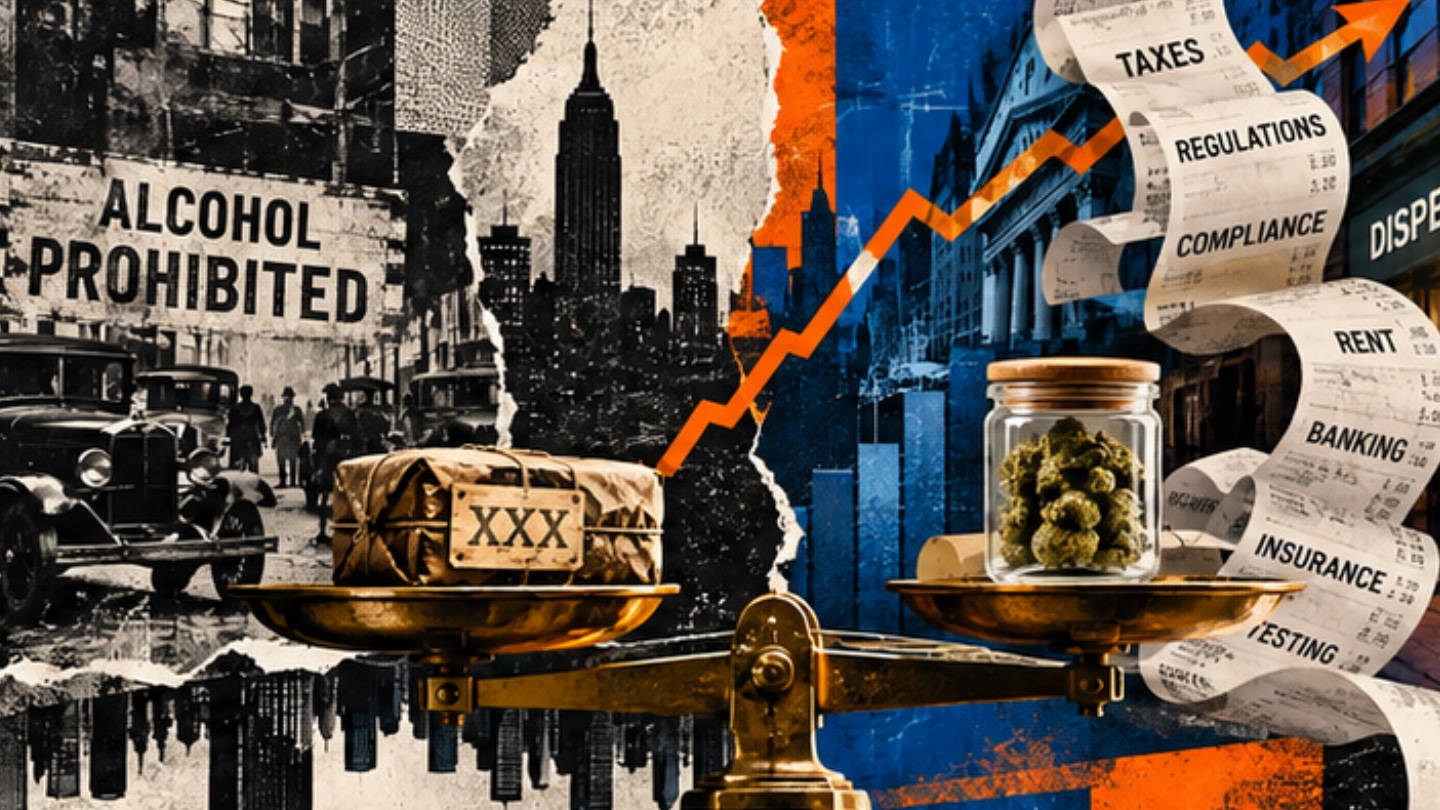
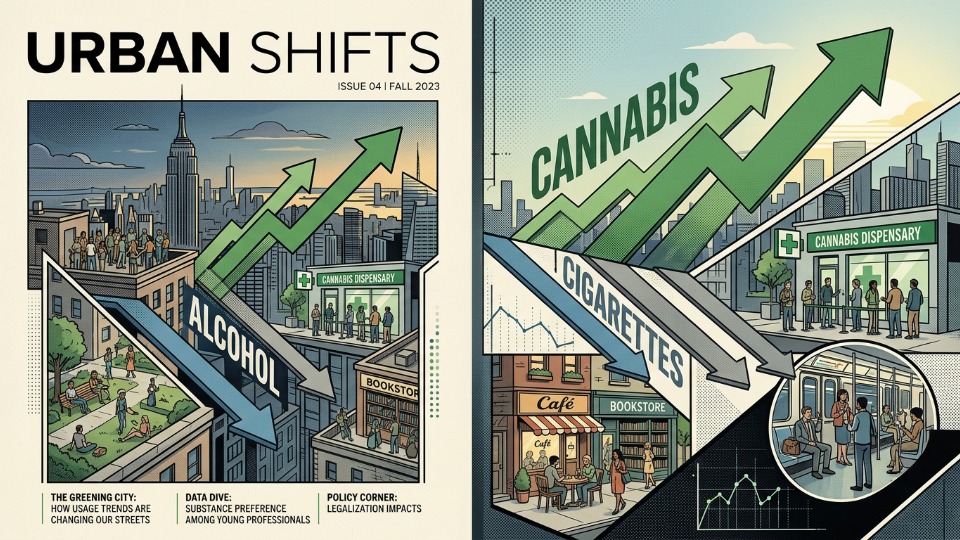
An estimated 21.4 million Americans aged 12 or older reported using marijuana on 20 or more of the previous 30 days in 2025, according to new detailed tables from the National Survey on Drug Use and Health (NSDUH), conducted by the Substance Abuse and Mental Health Services Administration. That compares with 19.9 million people who smoked cigarettes and 17.2 million who drank alcohol at that same frequency — the first time on record that frequent cannabis use has outpaced both.
For this comparison, NSDUH defines daily or near-daily use as use on 20 or more of the previous 30 days, applied consistently across cannabis, cigarettes, and alcohol. The estimates cover the U.S. population aged 12 and older and are based on self-reported survey responses. It’s worth being precise about what that measures: frequency of use, not quantity. The survey can’t tell us whether a given respondent took one small edible before bed or used cannabis repeatedly throughout the day.
21.4M
FREQUENT
CANNABIS USERS
19.9M
FREQUENT
CIGARETTE SMOKERS
17.2M
FREQUENT
ALCOHOL DRINKERS
Under NSDUH’s methodology, “daily or near-daily” cannabis use means consuming on 300 or more days in the past year; daily cigarette use means smoking on all 30 days of the past month. Even accounting for the different windows, the shape of the trend is unmistakable — cannabis use is climbing while cigarette smoking keeps sliding. Tobacco use overall dropped from 20.1% of Americans in 2021 to 15.9% in 2025, while general marijuana use climbed from 13.2% to 15.1% over the same stretch.
Frequent use does not necessarily mean every respondent is consuming large quantities or experiencing harm. But higher-frequency use is associated with greater risk of cannabis use disorder and impairment. NSDUH measures how often people used cannabis — not the dose, potency, product type, reason for use, or number of sessions per day. These figures shouldn’t be read as proof that cannabis is safer than alcohol or cigarettes; they describe a shift in frequency, not a verdict on relative risk.
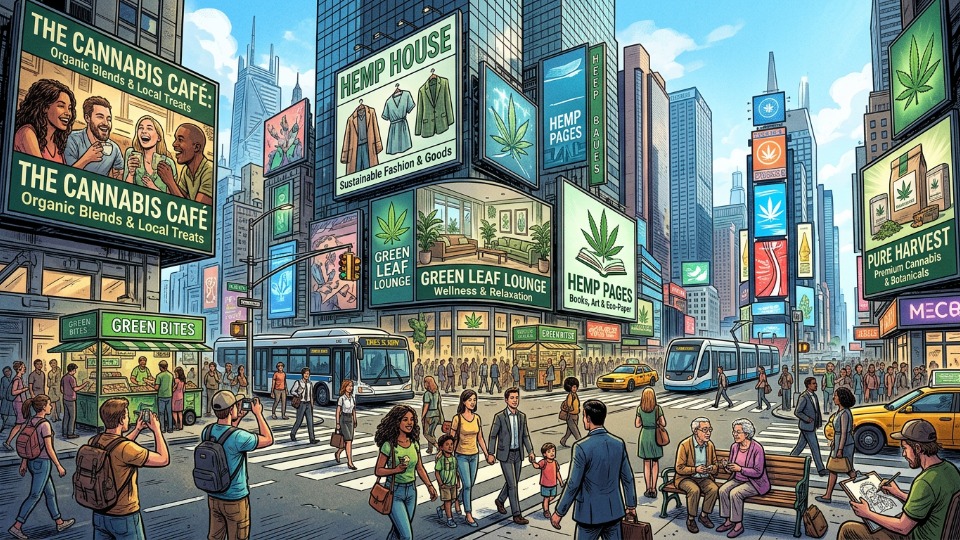
The federal survey doesn’t break out New York City-specific daily-use estimates. What we do have is a clear, well-documented picture of how fast the state’s legal retail market has grown alongside the national trend. As of the Office of Cannabis Management’s June 11, 2026 announcement, New York has issued licenses to 667 dispensaries statewide, including more than 280 across New York City, and the market has generated $3.3 billion in cumulative retail sales since Housing Works Cannabis Co. made the state’s first legal adult-use sale on December 29, 2022.
NEW YORK'S LEGAL MARKET — AS OF JUNE 2026 (OCM)
- 667 licensed dispensaries statewide, 280+ in New York City
- $3.3 billion in cumulative retail sales since December 2022
- Growth from 366 statewide dispensaries in April 2025 to 667 by June 2026
- Of over 2,000 adult-use licenses issued, 56% have gone to Social and Economic Equity applicants
OCM has framed the growth as evidence the market is scaling while staying grounded in the equity commitments written into the state’s 2021 legalization law. The office has also continued public-education efforts — including reminders that licensed dispensaries sell lab-tested products, guidance to “start low and go slow” with edibles, which can take one to four hours to take full effect, and standard warnings against driving after use.
A separate Modern Health survey of 1,000 full-time employees, conducted in April 2026, found that 63% of workers reported some form of substance-based self-medication after their workday, and 52% reported doing so during the workday. Gen Z was the only generation surveyed where after-work THC use outpaced after-work drinking — 59% reported using marijuana products versus 50% who drank alcohol, with 51% of that group reporting THC use during working hours. That’s a single employer-commissioned survey rather than a federal dataset, but it points to where the public conversation is heading: toward questions of impairment, dependence, and responsible-use education, not just market size.
“A good 40% of current cannabis users are using it daily or near daily, a pattern that is more associated with tobacco use than typical alcohol use.”
— JONATHAN CAULKINS, CARNEGIE MELLON UNIVERSITY, ADDICTION (2024)
NATIONAL USAGE TREND, 2022 VS. 2025
| Metric | 2022 | 2025 |
|---|---|---|
| Daily/near-daily cannabis users (U.S.) | 17.7M | 21.4M |
| Daily/near-daily alcohol users (U.S.) | 14.7M | 17.2M |
| NY licensed dispensaries | ~20 | 600+ |
| NY total legal retail sales (cumulative) | ~$16M | $3.3B |
*2022 figures use the 300-plus-days-per-year measure from Caulkins’ 2024 study, a different methodology than the 20-of-30-days measure used for 2025. Figures are directionally comparable but not a precise apples-to-apples match.
The national numbers are real and represent a genuine, multi-year shift: more Americans now report frequent cannabis use than report frequent drinking or cigarette smoking. What the data can’t do is tell us how that trend is playing out specifically in New York City households, workplaces, or health outcomes — that’s a separate, still-developing story. What is documented is that New York’s licensed retail market has grown enormously since 2022, now with hundreds of tested, regulated points of sale across the five boroughs. For state regulators and licensed operators, the findings illustrate both the scale of consumer demand and the ongoing responsibility to support accurate labeling, responsible-use education, youth protections, and a regulated marketplace that can compete with the unlicensed sellers that still operate in the city.
Editorial Disclosure: This article is independent reporting and was not sponsored, reviewed, or approved by a cannabis licensee. NYC Weed News does not sell cannabis and does not receive a commission from cannabis purchases. References to specific businesses are included for news and identification purposes and do not constitute an endorsement. Cannabis is legal in New York only for adults aged 21 and older. Do not drive while impaired.
Primary sources: SAMHSA, 2025 National Survey on Drug Use and Health, Annual Report and Detailed Tables; Jonathan P. Caulkins, Addiction (2024); New York State Office of Cannabis Management press releases dated March 31, April 3, and June 11, 2026; Modern Health 2026 Workplace Substance Use Survey. Figures current as of the sources’ publication dates and subject to revision as OCM updates its monthly dispensary counts.
Image Credits: All images used in this article are licensed through Adobe Stock for editorial use. Images are the property of their respective photographers and are used in accordance with Adobe Stock’s editorial licensing agreement.
© 2026 NYC Weed News. All Rights Reserved. Independent media covering New York cannabis culture, news, and street life.
NYC Weed News is a creative-first independent media group. Our visual content is produced using a range of AI image generation models including MidJourney, Adobe Firefly, DALL·E, and others. We embrace AI as a core part of our creative identity — and we make no apologies for it.
NYC Weed News is an independent media and informational platform focused on cannabis news, culture, mapping, events, and licensed industry resources. We do not sell cannabis products.
All content is intended for adults aged 21+ and is for informational and educational purposes only. No content on this website should be interpreted as medical or legal advice. Always comply with local laws and consult a licensed professional where required.