Where 420 Actually Came From
Every culture has its myths. Cannabis culture has 420 — and unlike most legends, this one has receipts.
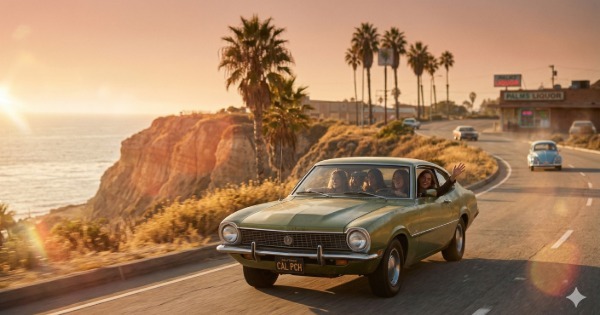
The story begins in the fall of 1971 at San Rafael High School in Marin County, California. Five friends — Steve Capper, Dave Reddix, Jeffrey Noel, Larry Schwartz, and Mark Gravich — went by the nickname “the Waldos,” because they hung out by a wall outside school. One day they caught word of an abandoned cannabis crop near the Point Reyes Peninsula, left behind by a U.S. Coast Guard member who couldn’t risk getting caught tending it. The Waldos got their hands on what they believed was a treasure map to the stash.
They agreed to meet after school at 4:20 p.m. — once football practice and other obligations wrapped up — at a statue of Louis Pasteur on campus. Each day in the hallways they’d remind each other with the phrase “4:20 Louis.” Over time, “Louis” got dropped. “420” became their private shorthand for cannabis itself.
“We weren’t thinking, ‘Hey, let’s start a movement.’ We were just goofin’ around and looking for weed.” — Steve Capper, original Waldo
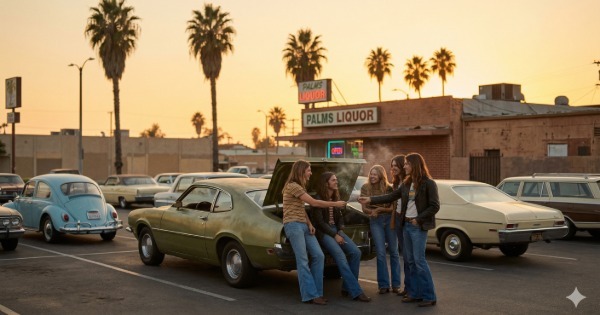
They never found the crop. But the code spread — first through their school, then through a connection that changed everything. Dave Reddix’s brother was close friends with Phil Lesh, the bassist of the Grateful Dead. The Waldos had backstage access to Dead shows, rehearsals, and afterparties, where “420” circulated freely through one of the most well-traveled communities in America: the Deadheads.
In December 1990, a flyer circulating in a Dead show parking lot in Oakland made its way into the hands of Steve Bloom, a reporter for High Times magazine. It invited people to meet at 4:20 on April 20th to celebrate cannabis. Bloom published it. The magazine ran with it. And 420 went global — not just as a time, but as a date, a holiday, and a movement.
How It Became a Holiday
By the mid-1990s, 4/20 had jumped from subculture to mainstream. College campuses from Berkeley to Boulder held mass outdoor sessions every April 20th. The number showed up in movies, music, and merchandise. It became a global shorthand that needed no explanation — if you knew, you knew.
As cannabis legalization swept across the U.S. through the 2010s, 4/20 transformed again. What had been an act of low-key civil disobedience became an outright celebration. Legal dispensaries started treating it like Black Friday. Brands competed for the most creative activations. Cities that once would have arrested people for celebrating 4/20 in public were now issuing event permits for it.
New York was a late arrival to legalization — the Adult Use Cannabis Act passed in 2021 — but the city has always had its own relationship with the holiday. Long before there were legal dispensaries on every other block, New Yorkers were gathering in parks on April 20th and making it their own.
How NYC Does It
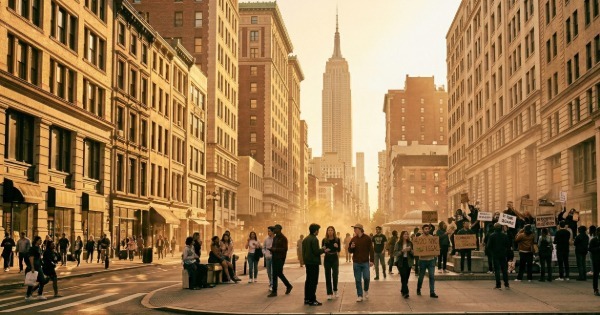
New York doesn’t do anything small. 4/20 in this city isn’t a single event — it’s a whole wave that builds across the week and peaks on the day itself. Here’s the landscape:
THE PARKS
Washington Square Park is the undisputed center of NYC’s 4/20 scene. The fountain fills up early, the energy keeps building, and by 4:20 p.m. the whole park lights up together. It’s free, it’s chaotic, and it’s one of the realest cannabis gatherings in the country.
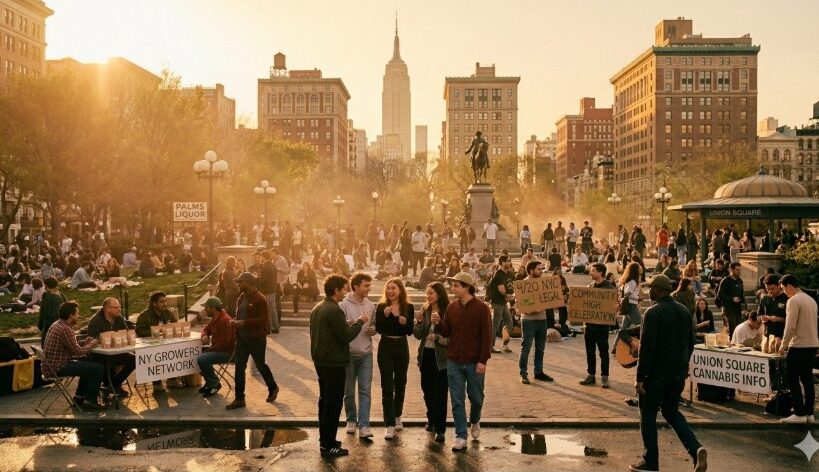
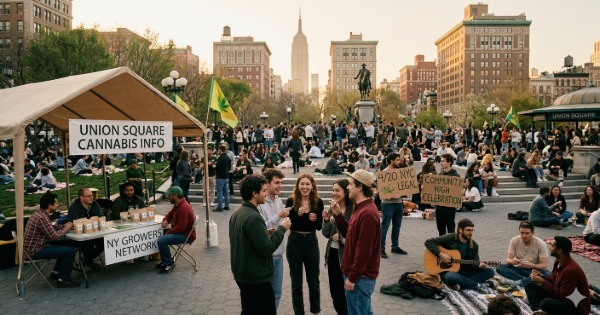
Union Square is always a scene too — especially now that some of the city’s earliest legal dispensaries set up shop nearby. On 4/20 it becomes a natural gathering point, with people moving between the park, the dispensaries, and whatever brand activations are popping off in the area.
THE DISPENSARIES
Legal NYC dispensaries go all out for 4/20. Expect deals running all week — not just the day of — plus brand pop-ups, product drops, giveaways, and limited-edition merch. The smart move is to follow your favorite shops on Instagram the week before, because the best offers tend to go fast and aren’t always advertised in advance.
THE CULTURE
Beyond the parks and the dispensaries, 4/20 in NYC spawns rooftop sessions, brand dinners, concerts, and private parties across all five boroughs. Brooklyn in particular goes hard — expect activations in Bushwick, Bed-Stuy, and Crown Heights alongside the official dispensary events.
Where to Be: 4/20 in NYC 2026
April 20, 2026 falls on a Monday — which means the real action stretches across the weekend before it. Here’s what to have on your radar:
Washington Square Park — The Main Event
April 20, 2026 | Free | Greenwich Village, Manhattan
The city’s largest and most organic 4/20 gathering. Show up anytime — but make sure you’re there at 4:20 p.m. for the communal moment. Expect giveaways, vendors, brands, and a crowd that has done this before.
Union Square — The Neighborhood Scene
April 20, 2026 | Free | Flatiron/Union Square, Manhattan
Union Square stays active all day on 4/20. It’s surrounded by some of NYC’s early legal dispensaries, making it a natural hub for deals, pop-ups, and foot traffic. The Cannabis March (a separate May event) calls this area home for a reason.
Stoops NYC — 4/20 Weekend Sale
April 18–21, 2026 | Check Stoops NYC for details
Multi-day activation spanning the full 4/20 weekend. Product deals, in-store brand activations, and curated experiences across four days. One of the more thoughtfully put-together dispensary events in the city.
Dispensary Deals Across the City
April 18–21, 2026 | Citywide
Nearly every licensed dispensary in NYC runs 4/20 promotions. Check Weedmaps, Dutchie, and individual shop websites the week of. Budget tip: many deals are tiered by spend — know your number before you walk in.
Brand Activations + Pop-Ups
All Weekend | Various Locations
Brands ranging from established names to new launches will be running pop-ups across Manhattan and Brooklyn. Follow brands you care about on Instagram — most announce locations 24–72 hours before. Eventbrite is also worth a search for ticketed evening events.
A Note on 4/20 in the Legal Era
Celebrating 4/20 in New York City is legal for adults 21 and over. You can possess up to 3 ounces of flower and consume cannabis anywhere tobacco smoking is allowed — which includes sidewalks, parks, and most outdoor spaces. What’s not allowed: cars, workplaces, schools, and any building that has its own restrictions.
Buy from licensed dispensaries only. Licensed shops carry OCM-verified products, display their certificate in-store, and can be confirmed through the state’s official lookup tool. Unlicensed shops — still operating across the city — carry no consumer protections and no lab-tested product. The savings aren’t worth it.
This is the era the city’s cannabis community has been fighting for. Go enjoy it.
For the full map of licensed NYC dispensaries, visit nycweednews.com/map